


Episode 135@#!!%&#!!: The PM PrepCast Bloopers Video
{youtube}00eNBMDmsnA|640|480|0{/youtube}
If you are a student of The PM PrepCast then you will appreciate this... a video with bloopers from The PM PrepCast. Enjoy.
{youtube}00eNBMDmsnA|640|480|0{/youtube}
If you are a student of The PM PrepCast then you will appreciate this... a video with bloopers from The PM PrepCast. Enjoy.
This episode is sponsored by:
 In the 2009 PM Podcast Listener Survey you told us that you wanted a) More product reviews and b) More PM soft skills. In this episode we combine these two requests in about 30 minutes.
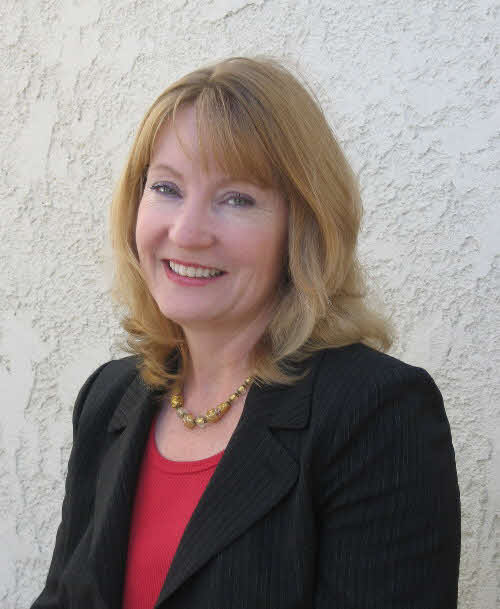
I'm welcoming Margaret Meloni, PMP who has been a guest many times on our program before. And from those interviews you know that Margaret is a great teacher of project management soft skills. In January of 2010 Margaret is offering almost all of her products with up to a 50% discount. So this episode is a combination of a) product review and b) discussion of PM soft skills. We talk about Margaret's products, interjected with a lot of soft skills talk.
In particular, during our discussion Margaret answers the following questions sent in live from Twitter:
And Margaret also gives us an overview of EQ - Emotional Intellingence.
This is the very first time that we are producing a show that has a strong focus on products for you to buy and improve your skills. Please leave a comment and let me know your thoughts on the result.
In this episode of The PM Podcast we are going to take a close look at something that is near and dear to myself: The PMP Exam. In particular we will talk about how to prepare for and pass the pmp exam. But there would be nothing more boring if I just began reading all the tips and tricks I have in my arsenal for this. So in order to make it more interesting, I have invited Bill Rouck, PMP to be on the program.
Bill is one of my PM PrepCast student and has passed his PMP exam just this year. So what you hear from him is pretty much the latest information in PMP exam preparation. We talk about the following topics:
We also announce the winners of our book giveaway. They each win a copy of the “Project Management Communications Bible”
This episode is reserved for subscribers of the Premium Podcast. Learn how to subscribe to the Premium Podcast to access this presentation...

 How many times have you heard anyone say that “Project Management consists of about 90% communication?”
Over time, this little saying gets more and more boring but also more and more true. Project Management is all about communications and ensuring that you communicate the right information to the right people at the right time using the appropriate tools and methods.
Let’s talk about these tools & methods and also about what some of the common project management communications problems are.
To do this I welcome Bruce Taylor and Bill Dow, the authors of The Project Management Communications Bible. Together we aim another spotlight onto the importance of proper project communication.
Communication is a critical, but often overlooked, component of successful project management. This means that we project managers must strive to becoming better communicators. But you cannot do that just by reading the PMBOK® Guide. It takes years of practice!
Enter Bill Dow and Bruce Taylor. Together they have over 60 years of project management experience and so they decided to write the “Project Management Communications Bible”. It contains many tools, techniques, and best practices in the area of project communications that you need to successfully execute projects, keep your team and customers fully apprised, and deliver crucial information in a timely manner.
Together we are going to take a look at a survey that was done in 2007 to determine the "Top 9 Reasons Why Projects Fail". Go ahead... guess... what might be #1?
Click to watch the video:
{youtube}MGu6itw00S8|640|480|0{/youtube}
In the 2009 PM Podcast listener survey an overwhelming number of respondents said that they would like to see product reviews as part of The PM Podcast. We listen and here is the first such in-depth review of Josh Nankivel's WBS Coach - a training program intended to help both beginners and advanced project managers in employing the WBS to support the success of their projects. The following is in our video:
And without taking anything away we are happy to say that we give Josh without hesitation 4.5 out of 5 stars for the WBS Coach. Josh created a highly professional and practical training and put all of his experience it. Take a closer look at it by going to www.mywbscoach.com. If you decide to buy it then The PM Podcast will receive a commission from your purchase which we can use to cover our production cost.
This episode is reserved for subscribers of the Premium Podcast. Learn how to subscribe to the Premium Podcast to access this presentation...
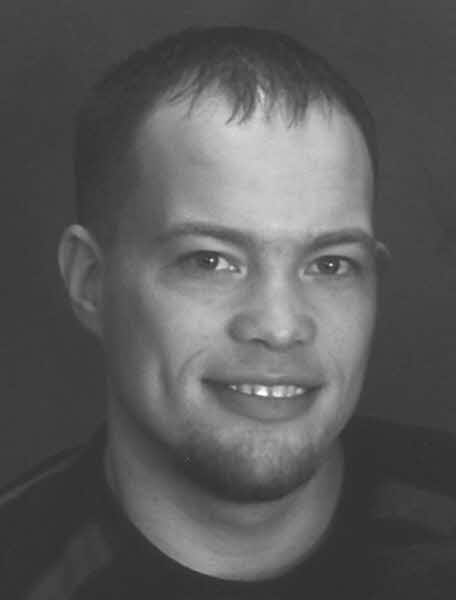 Last week, Josh Nankivel, PMP and I looked at some basics of the Work Breakdown Structure (WBS) and we identified how it will help you make your project better.
However, one of the biggest issues that you will be faced when using a WBS on your project is that you need to first create it. And as you are creating it, you will need to answer the following questions:
These are the questions that Josh and I are discussing. And at the conclusion of the discussion Josh tells us his favorite way of creating a successful WBS.
You can find out more about Josh's WBS Coach Training Program at www.mywbscoach.com and if you decide to buy then The PM Podcast will receive a commission from your purchase which we can use to cover our production cost.
A project is defined in the PMBOK® Guide as a temporary endeavor undertaken to create a unique product, service or result. At the core of this definition lies the fact, that there is “something” that our customers want and that it’s our job to deliver this something. We call this “something” the scope of the project. And the absolute best way to define, document and detail your scope is by using a Work Breakdown Structure (WBS).
But now honestly, when was the last time that you used a WBS on your project? And if you have used one, did you use it correctly?
Josh Nankivel is a PMP who has about a decade of project management experience. During this time he used the WBS on initiatives that range from small projects to large scale aerospace programs. The WBS was always one of the cornerstones of his work. Sometimes it was even a contractual requirement.
A few weeks ago, Josh released The WBS Coach. This is a down-loadable training seminar that you can go through on your own time. Josh put all of his experience and practical advice into this training and you can take a closer look at it by going to www.mywbscoach.com. If you decide to buy it then The PM Podcast will receive a commission from your purchase which we can use to cover our production cost.
In our interview today, Josh and I will be looking at the basics of the WBS and how you can best use it on your projects to make them a success.
This episode is reserved for subscribers of the Premium Podcast. Learn how to subscribe to the Premium Podcast to access this presentation...

In this second interview with Pat Zornes we are going a lot deeper into PMO Assessments.
In her white paper titled “Accelerating Enterprise Improvement with a PMO Assessment” Pat discusses 7 methods that can be used when performing such a PMO assessment. We look at what these methods are and how to use them.
Pat also recommends that we focus on the Process Life Cycle, Organizational Environment and PM Competency in our PMO as we perform the assessment. Here she’ll tell us why we need to assess these and how.
Update: Pat's paper is no longer available for download and we do not have a copy either. So sorry.
This week’s episode is on one of my favorite topics: PMOs. In particular we are going to discuss if a PMO Assessment will lead to accelerated enterprise improvement or if it is simply a waste of time. But of course, we first answer the question what on earth is a PMO assessment, how do you do one and what type of results and follow up work can you expect if you do it right.
To help us look at this I have invited Pat Zornes as a podcast guest. Pat is an executive consultant for Robbins Gioia (www.teamrg.com) wrote a whitepaper on exactly this topic so she has a lot to say about this. For instance, Pat says that “An effectively conducted assessment can save months or even years of effort and frustration. But a poorly conducted assessment can waste not only the time to do the assessment, but valuable time afterward implementing the wrong “solutions”.”
Let’s see what her recommendations are.
Update: Pat's paper is no longer available for download and we do not have a copy either. So sorry.
I attended the Gartner PPM & IT Governance Summit in Orlando, FL last month. During this time I got a chance to speak with Gartner's Audrey Apfel and learn more about specific findings and recommendations that Gartner has for it's clients.
Unfortunately, I was 25 minutes late to our 30 minute meeting.
However, Audrey was kind enough to get with me over the phone, so that we could still discuss the summit, what she sees as surprising research findings that were presented, her personal thoughts on important Project Management Office (PMO) strategies that organizations should keep in mind and lastly we also look at her recommendations in regards to Project Portfolio Management and Governance that companies with an existing structure and those who are just starting out must know about.
She has some excellent advice for all of us.
If you are interested in learning more about Gartner's services please visit www.gartner.com. Also, the tentative dates for the 2010 PPM & IT Governance Summits are May 2010 in London and June 2010 in Orlando, FL.
This episode is sponsored by:

Project Portfolio Management (PPM) describes a methodical approach for analyzing and collectively managing a group of current or proposed projects based on numerous key characteristics. And yes… you’ve heard me say this exact sentence about 2 weeks ago as I introduced the interview with Rick Moreau from Compuware. The reason why I am repeating this sentence here is because you are going to hear from 8 companies who were exhibitors at the Gartner PPM & IT Summit and learn more about 7 PPM Solutions and 1 online project management community.
The original plan was that I would have a short interview with every single one of the solution providers at the exhibition for you. Unfortunately in the end only the following7 solution providers and 1 media company had a representative who found the time to talk to me:
The order in which they are listed and in which you will hear these interviews in this episode is completely at random. I got a business card from each of my interview guests, tossed them into a hat and drew them out one by one. And the way they came out of the hat is the order we present them to you.
This episode is reserved for subscribers of the Premium Podcast. Learn how to subscribe to the Premium Podcast to access this presentation...
 In our first interview with Rick Moreau from Compuware (www.compuware.com) we looked at how to blend Project Portfolio Management (PPM) and agile software development methods for your organization.
One facet of the equation is a solid PPM tool – but as I always like to say “A fool with a tool is still a fool”. So how exactly can we ensure that our PPM tool helps us increase project success? What are the features to look for and use in these applications? And how do we implement it to ensure that our project managers are more than just "fools with tools"?
Well… who better to ask than someone who is at the forefront of PPM tool development? Say someone like Rick Moreau, who is the Field Enablement Director for Compuware's Changepoint PPM solution? In this premium episode rick and I explore this topic in more depth.
This episode is sponsored by:
Project Portfolio Management (PPM) describes a methodical approach for analyzing and collectively managing a group of current or proposed projects based on numerous key characteristics. The fundamental objective of the PPM process is to determine the optimal mix and sequencing of proposed projects to best achieve the organization's overall goals. Oftentimes companies have implemented a rigorous process for selection, management and administration of their project portfolio.
Agile software development on the other hand refers to a group of software development methodologies based on iterative development, where requirements and solutions evolve through collaboration between self-organizing cross-functional teams.
Contrary to popular belief, agile methods still promote a disciplined project management process that encourages frequent inspection and adaptation, a leadership philosophy that encourages teamwork, self-organization and accountability, a set of engineering best practices that allow for rapid delivery of high-quality software, and a business approach that aligns development with customer needs and company goals. These approaches to doing the work are reflected in the agile project management manifesto.
It’s the seeming incompatibility between these two approaches – the need for rigorous management of your portfolio vs. the adaptive approach of agile project management – that is at the core of our discussion with Rick Moreau, Field Enablement Director of Compuware (www.compuware.com).
We learn from Rick how these two approaches can indeed be brought together into a blended approach, how Compuware is using their own internal product development almost like a case study to prove it and how the need for portfolio management rigor can still be achieved under this mixed approach.
Did you like this episode of The PM Podcast? Did you like it well enough to take two minutes and go to the Apple Podcast directory to give us a rating or review? Yes? I would really appreciate it! Please go to www.project-management-podcast.com/reviews and tell the world how well you think we are doing.
This episode is sponsored by:
 Earlier this week I spent a couple of days in Florida at the Gartner Group’s Project Portfolio Management and IT Summit. We were at the beautiful Gaylord Palms Resort in Orlando. Here I had the chance to sit down with Mark Langley who is the PMI’s Chief Operating Officer.
In this interview we learn why PMI has sent a delegation to this event, we hear some of the feedback that PMI has received on the recent release of the 2nd editions of The Standard for Program Management and The Standard for Portfolio Management, we discuss the challenges that organizations face in regards to program and portfolio management and of course how PMI can help organizations deal with these challenges.
During our conversation we also touch several times upon the upcoming PMI North American Congress, which will be held coincidentally in the very same convention center where this interview was recorded. I won’t be able to be there myself but I strongly recommend that you attend. I have always found PMI Congresses to be a great way to connect to my peers.
This episode is reserved for subscribers of the Premium Podcast. Learn how to subscribe to the Premium Podcast to access this presentation...
This episode is sponsored by:
| How do you assign tasks and track your team’s progress? Calls, e-mails and spreadsheets – all that makes you buried in routine work. To get the full insight into projects and save up to 25 hours a month, thousands of managers worldwide use Wrike. To try Wrike free and get an exclusive, limited-time 25% PMPodcast discount on your one-year subscription, visit www.wrike.com. Apply “PMP” as the promo code. |
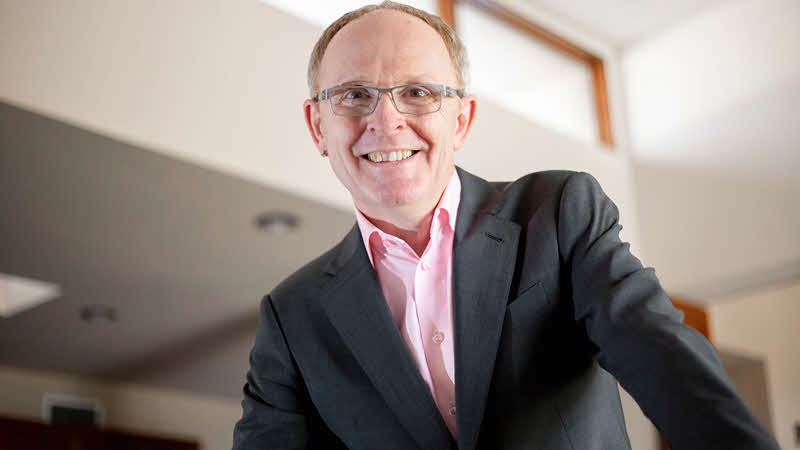 A little earlier this week I had the opportunity to participate in an online webinar from gantthead (https://www.gantthead.com). Mark Perry (from https://www.botinternational.com/pmo-podcasts.html) and I each gave a presentation on a specific topic on setting up a PMO. Mark's presentation discussed constituent and non-constituent focused project management offices, in which he conveyed the message that a PMO which is not focusing on the needs of its customers will eventually fail. And he had a great case study in support of this.
My presentation - the one which you see in this episode - is titled The 4-week PMO. This is a 90 minute presentation, which for the purpose of the online project management webinar was shortened to about 40 minutes. At some point I hope to turn the complete presentation into one of our PM Lectures. But for now, here is my approach that will give you a roadmap that enables you to set up your initial PMO framework in about 4 weeks.
This episode is reserved for subscribers of the Premium Podcast. Learn how to subscribe to the Premium Podcast to access this interview...
This episode is sponsored by:
| How do you assign tasks and track your team’s progress? Calls, e-mails and spreadsheets – all that makes you buried in routine work. To get the full insight into projects and save up to 25 hours a month, thousands of managers worldwide use Wrike. To try Wrike free and get an exclusive, limited-time 25% PMPodcast discount on your one-year subscription, visit www.wrike.com. Apply “PMP” as the promo code. |

 In this episode of The project management podcast we once again welcome back both David Shirley and Rich Maltzman from www.earthpm.com to talk about green project management.
We start out with a short discussion on certification programs for project managers and what Dave and Rich are doing to include the aspect of “green” into these programs. But then we are going to jump into the “how” of green PM. What exactly is it that you do to include aspects of green into your project during initiation, planning, executing, monitoring & controlling and finally also during closing of your project.
That is then followed by the discussion of lifecycle environmental cost. If you remember, Philip Crosby said that “Quality is free” and you can learn today that Dave and Rich feel the same way about green.
And lastly, you have heard of Earned Value Management (EVM), right? But have you ever heard of Environmental Earned Value Management (EEVM)? You definitely will hear about it in our discussion.
This episode is sponsored by:
| How do you assign tasks and track your team’s progress? Calls, e-mails and spreadsheets – all that makes you buried in routine work. To get the full insight into projects and save up to 25 hours a month, thousands of managers worldwide use Wrike. To try Wrike free and get an exclusive, limited-time 25% PMPodcast discount on your one-year subscription, visit www.wrike.com. Apply “PMP” as the promo code. |
Question: What’s green and manages a project?
The answer isn’t “Kermit the frog” the answer is “All of us”.
At least that is the answer given by Rich Maltzman and David Shirley from www.earthpm.com. David and Rich are two experienced project managers who realized that green is a must because according to PMI, the world will spend 1/5 of its GDP on projects, a hefty $US12 Trillion this year alone.
That's a lot of energy that we put into projects and those projects will use energy, save energy, use resources, and save resources in ways we cannot yet imagine.
That is why they founded www.earthpm.com which is devoted to the intersection of Project Management and "Green" - where green has to do with preventing climate change, preserving resources, and getting things done effectively and efficiently, which should already be flowing in the 'green' blood of any project manager worth their weight in risk registers.
This episode is sponsored by:
| How do you assign tasks and track your team’s progress? Calls, e-mails and spreadsheets – all that makes you buried in routine work. To get the full insight into projects and save up to 25 hours a month, thousands of managers worldwide use Wrike. To try Wrike free and get an exclusive, limited-time 25% PMPodcast discount on your one-year subscription, visit www.wrike.com. Apply “PMP” as the promo code. |
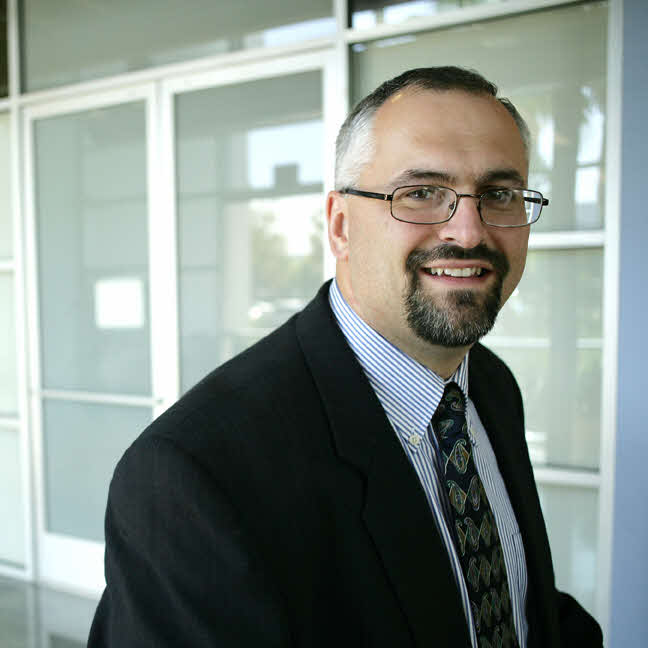
 In this episode of our program I am welcoming back Ron Holohan, PMP and Shawn Futterer, PMP to a roundtable discussion on the Project Management Office (PMO).
Ron works for a large consumer electronics company and a number of project managers directly report to him. He also created the company’s internal PMO portal. Shawn works for a telecommunications provider and is in charge of one of several large projects and also has other project managers who are reporting to him.
We begin our roundtable with Ron’s definition of what a PMO is, compare how this fits with all our understanding and then we discuss various aspects, tips & tricks from our PMOs.
The winners of two copies of Peter Taylor's book The Lazy Project Manager are:
This episode is sponsored by:
| How do you assign tasks and track your team’s progress? Calls, e-mails and spreadsheets – all that makes you buried in routine work. To get the full insight into projects and save up to 25 hours a month, thousands of managers worldwide use Wrike. To try Wrike free and get an exclusive, limited-time 25% PMPodcast discount on your one-year subscription, visit www.wrike.com. Apply “PMP” as the promo code. |
 Would you like to be twice as productive on your projects and still leave the office early? Peter Taylor, PMP (www.thelazyprojectmanager.com) has a suggestion for you: Become a "lazy" project manager. Peter is well-known on social media for project managers for his fun presentation style and knowledge of the industry. In his book The Lazy Project Manager he reveals how adopting a more focused approach to life, projects and work can make you twice as productive.
In today's interview we talk about productive laziness and how you can apply Peter's simple techniques and approaches in your own projects. We look at how to manage them from a 'Productive Lazy' point of view. Peter is not by nature, a lazy person and neither is our show host Cornelius Fichtner, but both of them have many other things to do in life, beyond the projects and podcasts that they manage.
Therefore, Peter's approach helps to balance life, projects and work. And of course, if you are involved in project manager coaching and mentoring for your team, you can pass on the tips to your colleagues.
Agile teams are by their nature set up to be productive and track work, but if you have the role of project manager in SAFe agile or, indeed any other agile environment, you will still find this interview eye-opening. I certainly did!
And as always when we speak to a published author you get a chance to win a copy of Peter's book. Listen in to participate and you may find The Lazy Project Manager in your mailbag.
The winners of our last contest where you could win a copy of Mark Perry's book "Business Driven PMO Setup" are: