In today's episode of The Project Management Podcast™ we welcome back Dina Henry Scott, PMP, who is the host of the Controlling Chaos podcast. We discuss our successes and failures, what we like and don’t like about our projects, we discuss our PMOs and we look at the the methodologies that we use. We finish it off with with the one thing that we wish we could change in our company. Oh... and we are having a lot of fun with it, too. This is everyday, real life project management brought to you by our combined experience.
Sigma is the 18th letter of the Greek alphabet and the lower case sigma (σ) is the symbol used to depict the quality management approach Six Sigma (6σ). Six Sigma is a system that was originally developed by Motorola to systematically improve manufacturing processes by eliminating defects. It was defined as a metric for measuring defects and improving quality as well as a methodology to reduce defect levels below 3.4 defects per million. Six Sigma has come a long way and is a respected methodology. Our guest today, is Steven West, who is a Six Sigma Black Belt and works for a financial services company. We explore the Six Sigma program of his company, the projects that he has worked on and learn what being a Black Belt has done for him.
Who defines what project management is? We all do. Some of you may have a blog and you publish your thoughts on project management that way. Or you discuss a methodology with a friend over lunch. Some introduce papers with exciting new ideas to attendees at conferences or give a presentation at their professional organization's monthly meeting. Others again write articles for newsletters or magazines. Then there are those who produce podcasts or discuss project management through other media. All of us define the current and future state of project management. And then there is Jerry Manas, PMP, President and founder of The Marengo Group, LLC (https://www.manasbooks.com and https://www.pmthink.com) who like many others decided to write a project management book. And it's the process of writing a project management related book that we are going to explore with Jerry today. Being a good project manager, he has a lessons learned file that he opens up for us. We hear how he came up with the idea, how he organized it, how he found a publisher, what it takes to publicize the book and what it felt like to hold the first copy in his hands.
Note: The information in this podcast episode is OUTDATED. PMI introduced another update to the PDU structure in 2015. Please visit our PDU page where you will always find the most updated information in regards to earning PDUs from The PM Podcast.
As a project manager you have to be many things. You have to be a great communicator, a leader, a visionary, and be able to both build and inspire the team, to name just a few. First and foremost, however, you have to be proactive. You employ strategies to plan the future in order to proactively minimize risk on your projects so that you can deliver on time and on budget. Why then is it that when November comes around you can hear a collective groan rise from the community of PMPs as they ask, where they could quickly get 20, 30 or even 40 or more PDUs before the year is through? Is this simply a case of the cobbler’s children having no shoes? No. I think that this is an acute case of not proactively trying to understand the PMI’s re-certification requirements. As we publish this episode on The Project Management Podcast™, it is about seven months before the end of the year, and we want to help you today to understand the PMP recertification process and how you can very easily gain those PDUs before year’s end.
Listener Alexander Maslyukov wrote in and said "In my company there are functional managers who have the power. Functional managers assign salary, bonuses and have responsibilities for promotion of the employees. PMs don't have any instruments to force stuff to do everything. The only way to make the team to do something is to persuade them. But how can we motivate people?" In response to Alexander's question we are going to delve into motivation today. We review the various motivational theories, look at how to see if motivation is a problem on your project, what you can do to motivate and energize your project team on a shoestring and we end it with James R. Chapman's very elegant Motivation Triangle. Please consult the Helpful Resources to find links to the white papers and presentations mentioned in today's episode.
Are you studying for the PMP exam? Then subscribe to The Project Management PrepCast™ at https://www.pm-prepcast.com and study by listening with your iPod.
In Episode 062 we asked Thomas Cutting to answer the question “How can I become a Project Manager?” Today, we continue this topic with our interview Guest Josh Nankivel. In his career Josh found a love for project management and decided to go back to school and get academic training in PM. He is currently going to school and will receive his Bachelors degree in PM in about a year. After that he will continue with his studies and begin his MBA with a focus on project management. In our interview, we look at how Josh applies his academic training to his everyday work, discuss if there are differences between what he is being taught and what he actually sees in the workplace, take a look at his blog www.pmstudent.com , and want to know from him what academia and the private sector can do in order to help the PM profession grow as a whole.
Too often in our rush to produce deliverables the communications plan is overlooked. This happens everywhere, even in companies that have formal project management methodologies. On the outset of your project you might have all the best intentions and take the time to create a communications plan. But as the project progresses and day to day issues come your way the communications plan is drifting ever more into the background. Your communications aren’t managed, new stakeholders aren’t added to the list of recipients and all that remains is a nagging feeling that you are forgetting something. That’s the story, when you use the communications plan as a tactical tool. But what if you approached it strategically? What if you took the time and really managed your communications against the plan? Might there even be benefits? Margaret Meloni answers this question with a resounding “Yes!”, which is why she is our guest today. And to help you along with your communications management plan, we have three helpful resources that help you define that plan for small, medium and larger projects. But most importantly, we announce the winners of the giveaway for two one-year subscriptions to The Project Management PrepCast™ .
A Risk is an uncertain event or condition that, if it occurs, has a positive or negative effect on a project’s objectives. There are many hard tools out there that tell you how to identify your risks, how to quantify them, how to define their impact on the project and what you can do in order to avoid or mitigate them. But how do you and the stakeholders on your project react to risks? Do risks frighten you or do they invigorate you? And what risk approach will a frightened project manager take versus the approach that an invigorated one takes? This discussion is at the core of Risk Attitudes. We are honored to welcome Janice Preston, PMP, on our program today to explore the four basic risk attitudes. Janice was a contributor to the risk section of both the 1996, 2000 and 2004 version of the PMBOK® Guide and as such very qualified to look into this with us. As always we have Helpful Resources that complement this interview.
If you are currently studying to take the PMP® exam, then listen in and learn how you can win a free, one-year subscription to our sister podcast The Project Management PrepCast™, where you can learn the tools & techniques you need to know in order to prepare to take the PMP exam.
"How can I become a project manager?" This is the question that we get asked most often here at The Project Management Podcast™. We tried to answer each email individually, but also decided that this would be a great topic for our program.
In the interview, we look at Thomas' own career but also take a generic look at possible PM career paths. There are many options for you to consider as a career, whether your interest is in construction, fashion, engineering, healthcare, or a particular method, like waterfall or you could take the role of project manager in SAFe agile environments and explore your interests that way.
We discuss the value of experience vs. certification and working as a PM in-house or for a consulting firm. Project manager coaching and mentoring is one way to reflect on what the right career path for you might be. If you are currently studying to take the PMP® exam, then listen in and learn how you can win a free, one-year subscription to our sister podcast The Project Management PrepCast™, where you can learn the tools & techniques you need to know in order to prepare to take the PMP exam.
Most often business applications do not have to achieve the same level of quality, accuracy, and consensus or be as fault free as many aerospace, defense or medical-related systems. That isn’t to imply they don’t strive for excellence and accuracy, only that it can be tolerated better. As a result, there are different priorities placed on quality and the use of disciplined approaches that demand a lot of up front time. In today's episode of The Project Management Podcast™ we welcome Inez Marino to discuss with her approaches that employ such an up-front time commitment that many businesses do not believe they can afford to spend. We also look at the importance of high quality requirements on your projects. Our two Helpful Resources complement this discussion.
Our host Cornelius Fichtner, PMP, has fallen ill with Temporomandibular Joint Syndrome (TMJ). This is a condition of facial pain in the joints of the lower jaw. The abbreviation "TMJ" literally refers to the joint itself, although it is often used to refer to the disorder (TMD). This means that he has a difficult time speaking because the jaw hurts when moved. For the host of a podcast, having a hard time speaking is a great misfortune. But what would it mean to you as a project manager, if you were diagnosed with TMJ? Could you still do your job without being able to easily communicate? Listen in to what experience Cornelius has had with this.
The dynamics of teams can be challenging. So what does it take to get a team to truly work together as a well-oiled machine? This is the question that we explore with Diane Altwies, PMP, of www.coreperformanceconcepts.com. She brings together the theory of team dynamics and offers some real-world advice in dealing with dysfunctional teams. We look at what the effects of a dysfunctional team are and discuss some ways in which you can change that. Starting this week, our helpful resources not only complement our main topic, we also begin taking a look at the podcasts that our host Cornelius Fichtner listens to in his spare time. Oh.... and did we mention that The Project Management Podcast™ now has over 500,000 downloads?
Today we are not going to look at project management. Instead, we will be looking at bleepers and bloopers because this is the "Out Takes Show". Have you ever wondered how much goes wrong, when we record an episode? The answer is: Too much. To close out the year, here are a few minutes of memorable and not so memorable moments from The Project Management Podcast™ when things went not according to plan. Listen to all the ahhs and umhs that we had to cut out of the regular program and which you were never really meant to hear.
Ask 10 project managers what they focus on most in their projects to be successful and you will get 10 different answers. Case in point are the 10 final questions that we ask at the end of every interview here on the program. Many of us may focus on communication, schedule, relationships or requirements. Jerry Manas, PMP, President and founder of The Marengo Group, LLC (https://www.manasbooks.com)and one of the minds behind https://www.pmthink.com would like to redirect our focus on the real client value. What does this mean and how does he propose to do that? The answer is Service Oriented Project Management, a PM framework that he developed and which he will be presenting in today's interview on The Project Management Podcast™. Two of our three helpful resources complement this interview by looking at similar PM approaches and the third one is of interest to everyone who would like to delve into PRINCE2. Click on the links below to see the helpful resources.
Are you struggling to get your projects done on schedule? Are you looking for a better, more profitable way to get things done? Then maybe you should take a look at Critical Chain Project Management. CCPM was developed based on Eliyahu Goldratt's Theory of Constraints and it is the main topic of today's episode of The Project Management Podcast™. We welcome Allan Elder, PMP, of www.nolimitsleadership.com to discuss Critical Chain Project Management. We look at why our projects are late and how the Critical Chain approach will benefit you. Allan can be contacted at This email address is being protected from spambots. You need JavaScript enabled to view it.. We also announce the winners of our book giveaway who each have won one copy of Quentin Flemings "Project Procurement Management". PMP® credential holders can claim 1 category 2-SDL PDU for listening to today's episode.
Tim Covington, PMP, was the Project Manager of the Boeing C17 Single Line Project, the largest lean manufacturing project ever attempted on the C17 Program. In today's interview of The Project Management Podcast™ we explore this large project. We discuss the goals and challenges involved, the success factors that enabled Tim and his core team to successfully deliver the project, the awards the project has won and Tim's tips to project managers who are embarking on similarly large projects. And just to break from our usual routine, we asked Tim not 10, but 11 final questions. We also continue our book giveaway of Quentin Fleming's book "Project Procurement Management" and we answer a listener question from our voice mail line.
Do you have a Project Management Certification? If not, are you considering to take one? Maybe you would like to become a PMP® credential holder, or you are looking at the IPMA range of certifications, or maybe you are even looking into a masters degree in project management. In either case, in today’s discussion with Stacy Goff, president of www.projectexperts.com and vice president of the ASAPM , the American Society for the Advancement of Project Management we will be looking at the difference between a competence based certification and a knowledge based certification, with particular focus on the IPMA certifications offered worldwide. We also have several helpful resources and we are giving away two copies of Quentin Fleming's book "Project Procurement Management".
In episode 49, The Project Management Podcast™ welcomed Richard Larson, PMP, and Elizabeth Larson, PMP, of Watermark Learning (https://www.watermarklearning.com ) on the topic of Project Without Borders and the issues a PM is faced when gathering requirements on a multicultural project. Today, we welcome Richard and Elizabeth back to discuss some of their best practices of engaging stakeholders in the process of gathering requirements. We will also reveal the winners of our book giveaway.
Most importantly, however, we are announcing the launch of The Project Management PrepCast™, which is a new podcast aimed at helping you, if you are currently studying for the PMP® Exam. Listen in at www.pm-prepcast.com and prepare for the PMP exam with your iPod!
The Project Management Podcast™ is pleased to welcome Quentin Fleming (www.quentinf.com [Update: The web page is no longer available so we removed the link]) as our interview guest this week. Mr Fleming is an author, instructor and consultant to management, with over three decades of project management experience within private industry. He has particular expertise in the design of and the assessment of project management control systems and is the co-author of the best-selling book "Earned Value Project Management". We discuss the history and the the basics of earned value management as well as his approach to "Simple" Earned Value which he outlines in an article that he wrote together with Joel Koppelman. The 10 steps, which the authors define are:
Step 1: You must define the scope (objectives and deliverables) of the project.
Step 2: You must determine who will perform the defined work, including the identification of all critical procurements.
Step 3: You must plan and schedule the defined work.
Step 4: You must estimate the required resources and formally authorize budgets.
Step 5: You must determine the metrics to convert planned value into earned value.
Step 6: You must form a performance measurement baseline and determine the points of management control referred to as Control Account Plans (CAPs).
Step 7: You must record all direct costs by project consistently with the authorized baseline budgets, in accordance with the organization’s general books of accounts.
Step 8: You must continuously monitor the earned value performance to determine cost and schedule departures from the baseline plan: both schedule variances (earned value less the planned value) and cost variances (earned value less the actual costs).
Step 9: Using earned value data, you must forecast the final required costs based on actual performance and keep management apprised so they can take corrective actions if necessary.
Step 10: You must manage the authorized scope by approving or rejecting all changes, and incorporating approved changes into the project baseline in a timely manner.
This is the perfect episode to listen to after our introduction to earned value management, so if you haven't heard that one yet, make sure to add it to your podcast player.
We also continue our book giveaway of two copies of Bas de Baar's book "Surprise! Now you are a Software Project Manager" and we have an announcement from PM Lessons Learned [Update: The web page is no longer available so we removed the link].
Cornelius Fichtner
Cornelius Fichtner, PMP, CSM, is the host and the author at The Project Management Podcast. He has welcomed hundreds of guests and project management experts to the podcast and has helped over 60,0000 students prepare for their PMP® Exam. He has authored dozens of articles on projectmanagement.com and PM World 360. He speaks at conferences around the world about project management, agile methodology, PMOs, and Project Business. Follow him on Twitter and connect with him on LinkedIn.
Project Management for Beginners and Experts
Going beyond Project Management Professional (PMP)®, PMI Agile Certified Practitioner (PMI-ACP)®, and Certified Associate in Project Management (CAPM)®
PM PrepCast, Agile PrepCast, PM Exam Simulator, PDU Podcast, PM Podcast are marks of OSP International LLC.
PMI, PMBOK, PMP, PgMP, PfMP, CAPM, PMI-SP, PMI-RMP, PMI-ACP, and PMI-PBA are registered marks of the Project Management Institute, Inc.






 In today's episode of The Project Management Podcast™ we welcome back Dina Henry Scott, PMP, who is the host of the Controlling Chaos podcast. We discuss our successes and failures, what we like and don’t like about our projects, we discuss our PMOs and we look at the the methodologies that we use. We finish it off with with the one thing that we wish we could change in our company. Oh... and we are having a lot of fun with it, too. This is everyday, real life project management brought to you by our combined experience.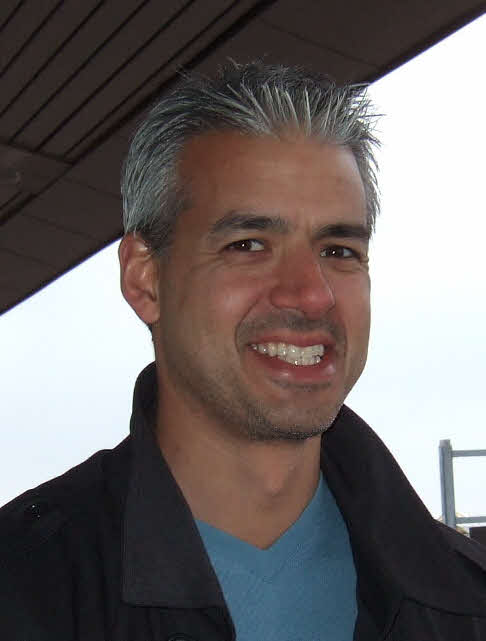
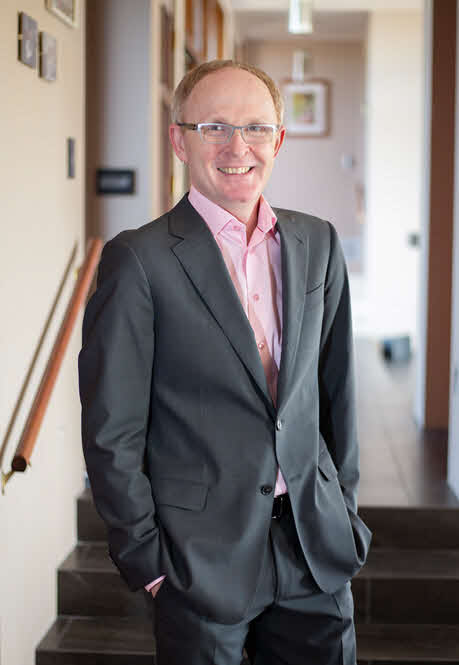



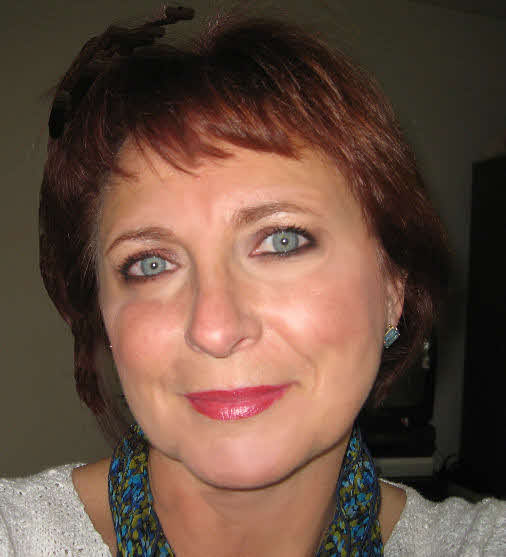
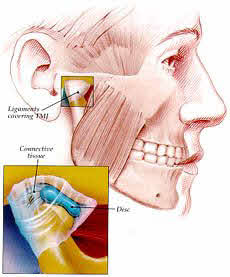 Our host Cornelius Fichtner, PMP, has fallen ill with Temporomandibular Joint Syndrome (TMJ). This is a condition of facial pain in the joints of the lower jaw. The abbreviation "TMJ" literally refers to the joint itself, although it is often used to refer to the disorder (TMD). This means that he has a difficult time speaking because the jaw hurts when moved. For the host of a podcast, having a hard time speaking is a great misfortune. But what would it mean to you as a project manager, if you were diagnosed with TMJ? Could you still do your job without being able to easily communicate? Listen in to what experience Cornelius has had with this.
 The dynamics of teams can be challenging. So what does it take to get a team to truly work together as a well-oiled machine? This is the question that we explore with Diane Altwies, PMP, of