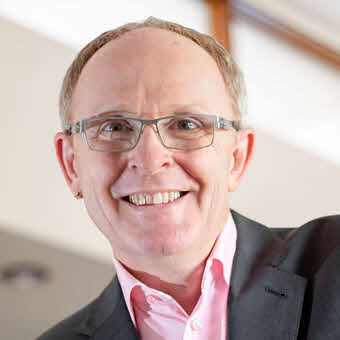
Show notes: Our main focus today is on Soft Skills. What they are, how they will help you become a better PM and how to improve your own set of soft skills. Two resources I mention for soft skills are Monster.com's soft skill "Quiz" and a whitepaper titled Accommodating Soft Skills in Software Project Management. Find them in the Helpful Resources below. A special hello and congratulations goes to my friend Thomas Schmidt in Germany who passed his PMP exam last week.
Below are the first few pages of a computer-generated transcript with all its computer-generated quirks.
Cornelius Fichtner (00:11):
You are listening to the project management podcast. We bring project management topics to beginners and experts. Find us on the web at pmpodcast.blogspot.com or send your emails to This email address is being protected from spambots. You need JavaScript enabled to view it.. Hello, and welcome to show number 18. I am Cornelius Fichtner. Now this is the project management podcast for the 4th of February, 2006. And today I'll be getting soft on you because the main segment of the show is about soft skills in my announcements. Let me start out with iTunes to be precise, the iTunes review section and my thanks. Go to OC Rob D for writing a great review about the project management podcast and giving me four out of five stars in the iTunes podcast directory. Thank you very much. If any of you listeners out there would also like to write a quick review and give me your rating on the show. Um, go to the music store and iTunes, find my podcast and click on the right review link, which you can see on the right hand side.
Cornelius Fichtner (01:26):
I have again received some wonderful listener feedback this time from Anthony Blore out of Manchester. And he thanks me for my great podcast here. And every email I get with constructive criticism and constructive feedback like Ks is encouraging me to continue the show. So please keep your emails coming. I really enjoy them well about sponsorship again here, does your company have a project management tool or maybe a project management book, project management seminar to promote well then why not become a sponsor of the project management podcast? Being a sponsor of the show will immediately get your message into the ears of thousands of project managers worldwide at a cost, which is definitely lower than what you would pay for an ad in a trade magazine. Simply write to me at This email address is being protected from spambots. You need JavaScript enabled to view it. and I'll be happy to discuss a sponsorship with you. And finally, I wanted to send congratulations to my friend Thomas Schmidt in Germany, who recently passed his PMP certification. So you got to that's your own Thomas. Alright, and now let us move on to the two segments, helpful resources and project management in the news.
Cornelius Fichtner (03:06):
I have four resources for you today. The first one is from Sabrina Mancini Johnson. If you recall, she was my interview guest last week on the show, and this one is straight from her website and it's a two page PDF document titled the top 10 characteristics of a successful project manager and a, well, this is, this is quite a good document. If you need to tell people what it is that you're actually doing, or if HR and your company is looking for project managers, if your boss's boss's boss is telling you, what does a project manager do? I mean, take out this document and give it to them because it gives kind of the great overview of, of what it is that we project managers really do. I mean, it's not the Gantt charts and making sure that deadlines are met. It, it it's inspiration have a shared vision.
Cornelius Fichtner (04:10):
It's a good communicator. You need integrity, empathy, competence, team building skills. All of these items are very neatly explained here on these two pages from Sabrina. The second helpful resource I have for you or I have for myself actually this week around is a document from project. Perfect. It's a part one of two. Unfortunately it's only part one at the moment and it's called developing a test strategy. One of my projects has recently just gone into the testing phase or will a in a couple of days actually, and this would have been great if I had had this a about three weeks ago. And of course I would need both the part Walnut part two. This has been written by Neville turbot from project. Perfect. I think we've, uh, I've mentioned him three or four times already here. So he's, he's producing rather good content.
Cornelius Fichtner (05:07):
And this is a humongously long document on how to develop a test strategy. This is good. If you have time on your project, if you can really focus on creating a test strategy, how you want to test things, who's going to test things, what environments you're going to test this on, what the test scripts are going to be, what are you going to do for retesting, et cetera, et cetera, et cetera. So this is a excellent template. If you wish for anybody who needs to develop a test strategy. In my case, I looked at it and I thought, wow, would have been great. If, if the previous project manager on my project here had, had used this and had created something useful like that, in my case, my test strategy is about five sentences and a and a table in length. So yeah, I wish I wish I had had this a few weeks ago.
Cornelius Fichtner (05:59):
The third helpful Reese's the resource I have for you is it's from comp T I a and it's titled the comp T I a project plus glossary of project management terms. This is a 16 page document, which contains well, yeah, a glossary of project management terms. For instance, what is performance reporting? Just picking one here, reporting to the stakeholders, to provide information about the project status, progress, accomplishments, and future project performance predictions. Lots of PS here. Well, this document is a good alternative resource for, shall we say to PMBOK, it's not an exhaustive as the glossary of terms in the PMBOK. The PMBOK is 44 pages in total focusing of course, on PMBOK terms. I assume Prince 2 has, has a similar glossary, but what I found is that these 16 pages here, the language is less complicated. You actually understand what they're talking about.
Cornelius Fichtner (07:08):
It's easier to comprehend. So my, my idea here is if you're looking for an explanation of a term, yes, use the PMBOK, use the Prince 2 glossary. Also use the white man's comparative glossary. If you remember max wideman.com , I really raved about his website and he also has a, has a glossary there. So use these glossaries that are out there and also use this comp Tia project management glossary in order to figure out what are these terms. If you have to explain it to somebody, the PMBOK Prince 2, they are more focused on the technical aspects. And this one here is, is, is simple, easy language. The fourth and final helpful resource I have for you today is something for beginners. It is part four of about dot coms, project management, one Oh one part four is talking about managing costs, money and profits.
Cornelius Fichtner (08:10):
And it's a very easy to read for beginners explanation on how to manage costs, money and profits on your project. The first three, um, items in this series here are part one overview of project management. Of course, part two was talking about managed resources and part three talked about managing time. I do not know where they're going in the future with this, but, uh, this is definitely going to be something because about.com keeps their content online forever and ever. So in five, six years, if you have something that you need to give to a beginner, this is, this is still great content that you can do. Also at the end of each page, they have suggested reading. They have related articles and even most popular videos, but I'm not sure if online music stores is something that we really need as project managers. So there you have it, the four helpful resources of this week. And now let's continue with the news.
Cornelius Fichtner (09:23):
I have six news items for you today. The first three I'm going to focus on on the last three, I'm just going to skim over quickly. First one is titled UCI Irvine's extensions, advanced project management simulation course offers chance to blah, blah, blah, blah, blah, blah, blah goes on and on and on has a humongously long title. But what it basically boils down to the UCI, the university of California, Irvine is offering an online project management course, big deal. You may say, well, it is for me because I am now on the UC I's advisory committee for project management. And we're going to have our first meeting on February the seventh. And I'm going to give you a little bit of feedback there. What it's like to work together with a university, uh, on their advisory committee, on project management, I'm actually looking forward to this. So it was interesting for me to see that they're actually putting out press releases for all of their, uh, project management seminars that they have. The second news item is titled business consultant. Wyrick Penn's book on project management. Well, that's really nothing new. There are dozens of books on project management out there, but, um, he is actually taking the apprentice project runway and trading spaces. Television shows here in the United States. And he is saying that well, if you're watching these shows, you're actually getting a lesson in project management. So very interesting to take the idea that what you see in a television show is project management and writing a book on it.
Above are the first few pages of a computer-generated transcript with all its computer-generated quirks. A human-generated transcript is available to Premium subscribers starting with episode 136.
Unfortunately, the template we mention in the interview is no longer available. We tried everything to obtain a copy as soon as we noticed, but unfortunately none of our listeners or Sabrina had kept a copy. Also, Sabrina's email address is no longer working and has been removed.
Today, the Project Management Podcast is featuring an interview with Sabrina Mancini from 2EnVision, Inc. We are talking about how to turn the search for your next job into a project. With templates, deliverables and all. Contact Sabrina at [email address removed] to receive a copy of the templates. (Note: as of 2007-04-11, her email is no longer working and we have no newer email.)
Episode Transcript
Below are the first few pages of a computer-generated transcript with all its computer-generated quirks.
Cornelius Fichtner (00:11):
You are listening to the project management podcast. We bring project management topics to beginners and experts. Find us on the web at pmpodcast.blogspot.com or send your emails to This email address is being protected from spambots. You need JavaScript enabled to view it.. Hello, and welcome to show number 17. I am Cornelius Fichtner. Now this should have been the project management podcast for the 21st of January, 2006. Unfortunately, after moving into my new home and took my internet provider 13 days until the 24th of January, 2006, to hook me back up. So now this is the project management podcast for the 24th of January, 2006. And today you will get to hear the interview with Sabrina Mancini Johnson, about how to use your project management skills in your job search. Let's get started with two announcements and some reader feedback, and then we will move right into that interview. The first announcement is about the schedule. I'm continuing to be a little bit more involved with moving into my new house.
Cornelius Fichtner (01:20):
So the next show is one and a half weeks from today on the 4th of February. So no show this coming Saturday, but Saturday in a week, announcement. Number two is about sponsorship. Does your company have a project management tool, a project management book or seminar to promote, then why not become a sponsor of the project management podcast? Being a sponsor of the podcast will immediately get your message into the ears of thousands of project managers worldwide at a cost that is much lower than what you would have to pay for an ad in a trade magazine. Simply write to me at This email address is being protected from spambots. You need JavaScript enabled to view it. and I'll be happy to discuss a sponsorship with you. Lastly, before we move on to the main section of the show, I have some listener feedback for you, which was posted by an anonymous listener on the blog on the website. And it's about my review that I did.
Cornelius Fichtner (02:27):
I think it was in a last show about bark world. They had a, it's a podcast called blogworld.com and they had a show on project manager and the listener writes, the guys at bog world are great and I listened to all their podcasts. However, their podcast on project management for web management was almost useless. They were both very flippant and seem to talk more about using Microsoft project than any formal framework or supporting material that is to say risk business cases, communications, contingency, et cetera. The review, the feedback goes on to say that web based projects now make a clear difference to the presentation and marketing of a company. I would have thought that they would have put more effort into this podcast, but it wasn't near Christmas at the time. If the guys at BlogWorld read this, or of course now hear this, I'm afraid, guys, you missed a great opportunity to sing the virtues of proper project management practice and provide some key tips and methods, especially where consultants are concerned.
Cornelius Fichtner (03:42):
That's about this review that I did on bog world.com. Well, to me, I still stand to what I said. I liked the, the feeling of what they did on that show because my experience as a project manager in web development was that it was always hectic. Always things were falling left and right. So the show that they did actually represented my experience, but it seems that this listener here has a completely different experience about project management in web development. I've been out of it for three years, Bre quite possible that things have changed in there. The listener finishes his review by writing, and now comes the usual slap on the back for you. Well done, great podcast. And by the way, it was me who went on about reading out too many emails about how great your podcast is. So you can skip reading this paragraph loops. Okay. I shouldn't have read that. Well, let's move on to the interview then with Sabrina Mancini Johnson,
Announcer (05:00):
The project management podcast feature interview today with the Sabrina Mancini Johnson, [inaudible] incorporated
Sabrina Mancini (05:14):
Ladies and gents today with me, I have Sabrina Manzini Johnson, and we will be talking about how to turn your career search into a project as you project managers should welcome to the show. Sabrina, thank you very much, Cornelius. Since we will be talking about the job search, let me start out by asking the question that everybody hears in their job interview. Tell me a little bit about yourself to ref back. Uh, my name is Sabrina Manzini Johnson. I am a local Southern California native. I have the pleasure of having two small children and also two wonderful Cocker Spaniels who I call family and a wonderful husband. And we live down here in beautiful Southern California at the same time beyond my family. I've been in the world of it, project management for nearly two decades now, which probably gives my years away to everybody out there in the listening world.
Sabrina Mancini (06:12):
You started with punch cards. I started out, uh, just at the time of punch cards. Let's just say I started off in those cold rooms. And so I'm along with the world of project management and being a full time. Mom, I am also actively involved in my civic interests in my community. And that's a little bit about me as a person. And what about to envision inc? How did that come about? Yes. To envision inc. As the name of our recently formed company, we incorporated as a California company in 2004 to envision inc uh, started off as a company in which after leaving the full time project management and it leadership world. I decided to go back to my consulting roots and create a professional services organization that catered to small enterprise project management, uh, projects, um, out of that, um, my husband and I own the company.
Sabrina Mancini (07:11):
So that's where you find the play on the number two. And we wanted to set up a company that was very forthright within the values of integrity. And so we started thinking of envisioning what we wanted to do. And we came up with the name to envision we've since grown into also having a staffing division that caters to project management. And we're enjoying our second year of existence, but only it project management it and business project management. And you'd be amazed how many requests we get for non it project managers? Yes, that's interesting because the PMI IOC here in Southern California, we have about 60% of it project managers. So is it changing again? There's the need going back to more non it projects? I think that there's definitely a, uh, a margin of project management that caters to the back office back office systems, the HR or the ERP, um, somewhat of the training and e-learning as well.
Sabrina Mancini (08:15):
And we're also seeing that there's a different variance and the interest of project managers by County, Riverside County being very strong with more of your manufacturing, semiconductors, um, and also some of our out of state requests that we get that are also, uh, certainly within the world of aerospace and or other types of industries out of, uh, out of state. How far out of state do you go right now? We have extended ourselves into the Texas area and we're partnering with some business in Texas and we're trying to take it slow and steady trying to have our focus more here in the Southern California LA area, but as the needs arise, we do certainly move into that direction.
Cornelius Fichtner (09:00):
Alright. Okay. So that was a little bit about yourself. Let's move over to your templates. Now, when I first met you, that was at the networking evening that we had on November 16th, I think. And you can give a 90 minute presentation titled project managing your career search. Um, what prompted you to choose that topic?
Sabrina Mancini (09:24):
Well, a fellow peer of mine that was heading up the career nights had asked me to be a guest speaker. And, um, she had really kind of asked me to come up with something that was unique after all. It was the closure of this, uh, experience in this career night. And I think that she was concerned that maybe everybody had heard everything already once or 10 times. Um, so it, wasn't a very hard for me to come up with this concept, being that, as I was speaking to people who were perhaps career searching, I really wanted to cater to something that really inherently hit home. And that was a fact that project managers need to address their career search. Just like a project that you construct with an initiation phase and post execution phase. Right. And I thought we don't do this very well as project managers. We think that there's some other magic to doing projects outside of our day to day world, but there is no magic. And so I wanted to show that you can apply the same methodologies we use in business towards your personal career search, or maybe a project that you may be having in some other capacity in your personal life. I definitely found that it was unique. I mean, I was sitting there. I was listening to you. I was thinking, Oh my God, this is so new. This is so
Cornelius Fichtner (10:48):
Different. That's why I ask you to be here now, do you know, do you know if anybody has actually used them
Above are the first few pages of a computer-generated transcript with all its computer-generated quirks. A human-generated transcript is available to Premium subscribers starting with episode 136.
Show notes: Listener Harry Fisher submitted an overview of his Groupware Solutions project to The Project Management Podcast and we are happy to feature him today. Listener Michael Witt submitted today's helpful resource and the new year brings several excellent items in the News segment to project managers. The show ends with a review of an episode of Boagworld, where Paul Boag discusses Project Management with Marcus Lillington.
Below are the first few pages of a computer-generated transcript with all its computer-generated quirks.
Speaker 1 (00:09): [inaudible]
Cornelius Fichtner (00:11):
You are listening to the project management podcast. We bring project management topics to beginners and experts. Find us on the web at pmpodcast.blogspot.com or send your emails to This email address is being protected from spambots. You need JavaScript enabled to view it.. Hello, and welcome to show number 16. I am Cornelius Fichnter. Now this is the project management podcast for the 7th of January, 2006. Happy new year to all of you. I am very glad to tell you that today's main show segment comes from Harry Fisher, who is a listener like you, and decided to send me his input. A couple of announcements here to get us started. First of all, uh, we are still on a two week schedule, so there is no show next week. And then there is one the week after that. Also, I promise to you in the last show that today we would have an interview for you on how to manage your job search as a project. Well, I had to change some scheduling around and you will get to hear that particular interview into weeks down the road. And now a word from our sponsor project load is the web based project management tool for your team. As project manager, you create the tasks and assign activities as your team progresses. Their time sheets automatically feed into project reports with task forecasting documents, storage, integrated notes, and over 25 alerts project load is the one tool for project monitoring. Visit us at projectload.com
Music (01:59): [inaudible]
Cornelius Fichtner (01:59):
Today I have one helpful resource from you and this one was sent to me from Mikael Vitz. He is a project manager for sun Frankfurt, and he writes, I Cornelius my project management colleagues, and I are certified as Prince 2 practitioners. We adapted Prince 2 here at sun Microsystems in Germany. In your last podcast, you discussed status reports. I Googled and found a Prince two templates set, including status reports. We adapted these templates within our company, best wishes to California. Well, everybody go and get these templates. They are an excellent starting point for anyone who needs new templates or who is in the process of updating their templates. But even if you're not go take a look, because I'm sure when you look through these templates, you'll find something useful in them and you'll go, Oh, this is, I should include that in my templates as well. Yeah. And that's the only helpful resource I have for you because there is tons of news this week and new year, lots of news. It seems so on. We go with the news.
Cornelius Fichtner (03:21):
So what do you think is going to be big in project management in 2006? Well, that's what the article here in the computer world addresses it is entitled. What's next in 2006 project management, the five biggest project challenges for 2006. This is from the 2nd of January, 2006. And they have five items that they're talking about here. The global teams, of course, we know that that's been going on for quite a while. Then they're talking about moving parts projects that are constantly influx and constantly changing. And of course, rather challenging. Then they'll talk about software development. Then the next one entering number four here is vendor partners. So working on a project management basis with vendor partners, it's going to be big. And finally, their fifth prediction is that project portfolios are going to be big in project management in 2006. Definitely an interesting read this article here.
Cornelius Fichtner (04:33):
What else do you think is hot in 2006? Well, the PMP certificate is hot in 2006 to be precise, precise, it ranks or number four on cert city's 10 hottest certifications for 2006. And this is our annual attempt to predict the certifications that will shine brightest next year. And cert cities is an online magazine for the certified it professional. They write PMI's PMP title also made a strong showing this year, rising from its debut. Stop at number 10 last year. Thanks to in part thanks in part to even a stronger buzz for this industry neutral title within the it community. So if you haven't got your PMP yet, well, think about it.
Cornelius Fichtner (05:33):
Are you a work break down structure guru? If so, then the PMI is looking for your help. This article here is from Thursday, December 29th, and it's titled PMI seeks input to practice standard for work breakdown structure until the January deadline 2006, the PMI makes the latest work breakdown, structure, practice standard available to everybody in the world on their website. Well, you have to sign up and sign 25 disclaimers, et cetera, but you have the opportunity to give your input into the WBS practice standards. So if you're a WBS guru, go and give the PMI a hand And we're ending today's news with two that come from the far side of the news, really the first one is entitled. Ex-combatants train on project management and it comes to us, came to us on December 30th, 2005 from the new times in Kigali, they write child X combatants association in collaboration with the international labor organization is training ex-com battens on project management and design the ongoing 10 day training attracted 20 members from different associations funded by ILO to improve capacity building among youths who were affected by war. Interesting.
Cornelius Fichtner (07:24):
And finally, we stay on the far side of the news. FBI is looking to hire I T workers interviews for a number of it jobs begin next month, that was on the 29th of December. And they're writing here in the computer world. The FBI is looking for a few good it professionals to operate and maintain a robust, secure global it infrastructure environment for the agency in announcement last week, the agency said that it's seeking to fill critical it positions, including computer scientists, computer engineers, it specialists. And of course it, project managers annual pay for the positions range from 35,000 to 135,000 us dollars, not bad based on experience and qualifications with recruitment bonuses, for the candidates who possess the most critical skills. The FBI said, okay, why not become an agent project manager? And that's the helpful resource and news for this week as always, if you want to read up on any of the resources or news in detail, just go to a PM podcast.blogspot.com, where you will find links to each individual item that I have just mentioned. And now the project management podcasts, project
Cornelius Fichtner (08:56):
Management tip of the week,
Music (09:20): [inaudible]
Cornelius Fichtner (09:20):
The project management podcasts tip of the week is divide your projects into phases. Now let's begin at the beginning. What's a phase. What's the definition? Well, the PMBOK defines a phase as a collection of logically related project activities. Usually culminating in the completion of a major deliverable project phases are mainly completed sequentially, but can overlap in some project situations. Phases can be subdivided into sub phase it phases and then into components and so on. It goes on and on and on, but doesn't really tell you what the benefits are of dividing your project into phases. Well, it's quite simple. It makes it easier to manage your project, both planning and estimating because instead of having one large lump of work, if you divide your project into phases, you end up with smaller, more manageable pieces of work. And personally, I like to subdivide these phases into steps.
Cornelius Fichtner (10:34):
So let's say if we're talking about the implementation of some, some software piece, I'm saying, okay, step one in March, we'll be delivering the following features. Step two in April, you'll get these features and may you get those features? So that's, it makes it also much more understandable to the customer. If you have phases and steps, the, they understand that better. If you look at the PMI phases, their official phages are initiation, planning, executing, controlling, and closing. If you look at prints too, it's a bit different. They're talking about starting up and initiating a process planning and directing a project, managing stage boundaries and controlling a stage managing product delivery and closing a project. Those are the Prince two, uh, phases. And if you're looking at general phases, we're talking about planning, analysis, design, testing, and implementation phases. Also allow you to plan your project on a more, um, let's call it as you go basis.
Above are the first few pages of a computer-generated transcript with all its computer-generated quirks. A human-generated transcript is available to Premium subscribers starting with episode 136.
Today's show contains the following show segments: Helpful Resources, News, The Tip of the Week, two Good Bad & Ugly Reviews, and in the main section of the show we are talking about Project Status Reports.
Two new Podcasts on Project Management are now available:
- The Project from Hell Saga by www.4pm.com - Estimating Technology Projects by www.ireqwire.com [Update: the template website is no longer available, so we removed the link]
Project Management in the News - Managing Megaprojects - Microsoft to Acquire UMT, a Leading Provider of Portfolio Management Software and Solutions [Update: the template website is no longer available, so we removed the link]
- Voice Over Project Management Software Developer Interactive Voices Announces Trial VoiceSuite Account For Clients
Episode Transcript
Below are the first few pages of a computer-generated transcript with all its computer-generated quirks.
Speaker 1 (00:09): [inaudible]
Cornelius Fichtner (00:11):
You are listening to the project management podcast. We bring project management topics to beginners and experts. Find us on the web at pmpodcast.blogspot.com or send your emails to This email address is being protected from spambots. You need JavaScript enabled to view it.. Hello, and welcome to show number 15. I am Cornelius Fichtner. Now this is the project management podcast for the 24th of December, 2005. Merry Christmas to all of you today. We'll be looking at status reports, what to write in them and what to not write in them. And we also have two reviews in the good, bad and ugly series for you on the show today. And you can consider the second one as kind of a Christmas present, because I will be reviewing two new podcasts for you. That focus solely on project management. Actually it's two and a half new podcasts for you that comes out at the end of the show, but no fast forwarding here to start out the show. Here are a few announcements and items that I want to get off my chest. And we start with a message from our sponsor project load is the web based project management tool for your team as project manager, you create the tasks and assign activities as your team progresses. Their time sheets automatically feed into project reports with task forecasting documents, storage, integrated notes, and over 25 alerts project load is the one tool for project monitoring. Visit us at projectload.com.
Cornelius Fichtner (01:54):
Eric Johnson wrote in and he writes, I graduated from Tennessee technological university with a business M I S degree in December, 2003, I started working like most new it graduates with hardware and PC support and since moved to developing applications with.net tools. My goal is to use this experience in project management in the near future project management just makes sense to me, the more I learn about it and project management, the more I see the similarities between industries and processes, I've enjoyed your reviews and explanations on PM, techniques, events, and your podcasts. In general, I feel that your site references and podcasts are a great tool for me. As I developed my plan to pursue project management as a profession, the reason why I'm actually reading this to you is because of the question which follows. And he writes Cornelius, can someone XL in project management without a PMP certification?
Cornelius Fichtner (03:03):
Or do you think it is a necessary justification to be accepted within the profession? The only reason I ask is it seems that getting a PMP certification is very trendy for lack of a better word. I do not want to jump on the bandwagon just to get a PMP because it's the thing to do. I want to be a successful project manager. If those go hand in hand, then I have no problems putting the effort forth to get one. How do you feel about this? Well, in my view, the PMP certification more or less tells me that you were able to sit down for a four hour exam and answer a certain number of questions correctly, that you have passed sort of a minimal standard in project management to even get to this level, to even be able to take the test. You had to have certain number of hours in project management, certain number of years, you had to have certain training.
Cornelius Fichtner (04:10):
So that to me just tells me where you are at in your knowhow as a PMP, as a project manager in general. It does not tell me that you are a good project manager. I mean, have you ever had a doctor, a medical doctor with whom you weren't happy? Well, it's exactly the same thing with project managers. Being a PMP only tells you that you have some sort of a certification. It doesn't tell you you're a good project manager. Yes, you can definitely be a good project manager without having the PMP certification, but having gone through the training, having taken the test gives you a common vocabulary with me. It gave us both of us, the same common understanding of the tools and techniques and processes. And if I had to choose between two people, one is a PMP and the other one is not a PMP.
Cornelius Fichtner (05:11):
I would probably focus more or lean more towards the PMP simply because I know how this person is supposed to think because of the training that went into him, uh, into, into the PMP certificate doesn't mean that he's the better project manager. I don't really know. I will learn that afterwards. What you will also find is that the PNP seems to be more or less a required item. Now in most of the job ads that you see, PMP is no longer, um, suggested PMP is required. PMP will also give you our RESPECT. It will give you the respect. It will give you the respect from the HR department simply because they are looking for that. It will give you the, from your peers, project managements like myself. And it'll give you the respect of your colleagues at work, whom you work with because they know that you have a certification in what it is that you're doing.
Cornelius Fichtner (06:11):
So there are pluses and minuses as for me, yes, getting a PMP is worthwhile simply because it puts you on a level playing field with everybody else out there. Alright, enough said about whether or not to get a PMP or not, but I found something quite interesting in the Yahoo groups. I, uh, I monitor the Prince two project management Yahoo group, occasionally, and I found the following question from Gregory Tucker. I don't exactly know what Gregory is from, but he writes, I am currently studying for the practitioner exam. That's of course the Prince 2 practitioner exam. I have taken and failed at once. Does anybody know how many practitioners there are in the United States for Prince 2? Eh, doesn't seem very popular right now in the U S but with increasing adoption of ITIL in North America, I suspect there will be a growing interest in Prince too, as well over the next few years.
Cornelius Fichtner (07:17):
Well, Greg, I don't know, but let's put this out here to the listeners. If you are a Prince two practitioner and you've taken and passed the exam, I'd appreciate it. If you would drop me a quick This email address is being protected from spambots. You need JavaScript enabled to view it., and I can tell you that number, and we can announce that in the next show, you may remember in the past, I have been talking about whether or not listening to the project management podcast would qualify for PDUs. If you are a PMP you're required to obtain 60 PDUs in three years to keep your certification going. Well, I had a bit of back and forth between the PMI and myself. I didn't agree with their initial. No, you can't do this, but I have now received a clarification from Edwin Delgado and he is the continuing certification processor at the PMI. He writes, I do not doubt the content of your broadcast or the work that you must put into your lecture style broadcast that you provide to the listeners.
Cornelius Fichtner (08:29):
The real question is in regards to reporting the PDUs, how would we, the PMI possibly know that they were really listening to the whole broadcast or just part of it? How do we know that actual learning took place? There is such a thing as distant learning, but interaction between the student and the teacher is always present such as in a or over the web. If you were to provide some sort of a PDU code at the beginning and end of YouTube, your shows, who is to say that the people reporting this code listened the entire session or that they were just given the code by someone else in a classroom lecture, there would at least be a person present to verify attendance and verify that they completed the entire lecture, or course there is an actual teacher to student interaction at all times. Okay. That makes it clear. Just listening to the project management podcast does not qualify for PDUs. I would, of course have preferred that the PMI says yes, and that listening to the project management podcast is a qualifying activity for you PMPs out there who are listening to the show, but I can understand the arguments that Edwin Delgado makes, and I accept his decision. And now let us move on to that helpful resources and followed right after that, to the PM news.
Cornelius Fichtner (10:08):
I have five resources for you today, but I'm just going to breeze through to the first forum, concentrate a little more on the fifth one here today. The first two are from the same website. There's a free registration that's required in order to read those. And there are both high level overviews. The first one is a high level overview of project management offices. And the second one is a high level overview of project management methodologies. They're both kind of something that you may want to give to a manager type person who is interested in understanding more about PMOs and project management methodology. And the second one about the methodology is also quite helpful. If you'd like to learn a little bit more about the basics of the PMI methodology, the third helpful resource is titled project management techniques for adaptive action. It is sort of a comparison between agile project management and also heavyweight project management as they call it.
Above are the first few pages of a computer-generated transcript with all its computer-generated quirks. A human-generated transcript is available to Premium subscribers starting with episode 136.
Today's show features an interview with Robert Perrine, PMP, ITIL-SM. Robert and I met for this interview following the monthly PMI-OC Advanced Topics Seminar at which he spoke on ITIL, the Information Technology Infrastructure Library. Read up on ITIL at the British Office of Government Service [Update: The web page is no longer available so we removed the link].
Below are the first few pages of a computer-generated transcript with all its computer-generated quirks.
Speaker 1 (00:09): [inaudible]
Cornelius Fichtner (00:11):
You are listening to the project management podcast. We bring project management topics to beginners and experts. Find us on the web at pmpodcast.blogspot.com or send your emails to This email address is being protected from spambots. You need JavaScript enabled to view it.. Hello, and welcome to show number 14. I am Cornelius Fichtner. Now this is the project management podcast for the 10th of December, 2005. And today we have a feature interview with Robert Perrine in which we will be talking about ITIL the information technology infrastructure library. To start off the show here are as always a few announcements and things I want to get off my chest. First of all, starting today, we will change to a two week release schedule until about the middle or end of January. This means that there will be no show next week. Then there will be a show. Then there will be no show. Then there will be a show. Again, the reason for that, it's quite simple.
Cornelius Fichtner (01:17):
Next week, next Saturday, I have a birthday coming up, so I wouldn't have done the show then anyway, but, uh, the reason why I'm continuing to do this until the end of January simple, I am buying a new house and, uh, yeah, that's quite a project. It's taken up a lot, a lot of my free time. So I really have to focus on that. And I'm going to change to this two week release schedule, but remember it's only until the end of January, and then we're going back to the one weeks and now a word from our sponsor project load is the web based project management tool for your team. As project manager, you create the tasks and assign activities as your team progresses, their time sheets automatically feed into project reports with task forecasting documents, storage, integrated notes, and over 25 alerts project load is the one tool for project monitoring.
Cornelius Fichtner (02:17):
Visit us at projectload.com. Now let's move on to the listener's survey. Well, I've been making this announcement several times. The listener survey is up on the blog, and if you would please give me your feedback. That would help me a lot. And today I want to tell you what I have learned from this listener survey. There are three items that I would like to read to you from which I have learned, and from which I will be improving this show, of course, I don't know who wrote them because this survey is completely anonymous, but here you go. The first one, I really like this is the best one that I've had on the survey so far. And it reads, please, please, please do not read out emails saying how fantastic this podcast is it just wastes time. Your last podcast went on for five minutes. Just reading out how wonderful it was.
Cornelius Fichtner (03:18):
Okay, it's good. But please move on. We are listening for the content. If you just read out news, et cetera, we can get that from the same sources that you do. It's not very useful. Having said that generally the rest of your podcast after the fire first five or 10 minutes of backslapping emails is great. All right. I agree with you a half way. I agree. Reading the backslapping emails. That's not really all too great, but unfortunately I don't get any others. So if you are out there and you want to write me an email that tells me how great the podcast is, please also include some real advice or maybe something from your experience as a project manager could, I can include in the podcast. So please keep your feedback coming, send me your emails, but tell the other listeners about your life. And I can stop reading all these backslapping emails.
Cornelius Fichtner (04:23):
But on the other hand, I disagree with not reading news because other feedback on the survey told me quite clearly, that news is liked. People are listening to the news that are eat here, so I will continue to do this, but I will try and stop to read the backslapping emails. The second feedback from the listener survey was as follows. Great show, that best podcast I listened to. Okay. Some backslapping here. Once again, I have only one remark. Could you please reduce the volume of the sound of the typewriter between your news items? It really gives me a headache. Apart from that, the sound quality is superb. I've been wondering about that myself, because I personally thought that it was a bit loud, but nobody complained. So I kept it at that starting today, the sound of the typewriter is going down and the third and last feedback from the listener survey is quite short. All it reads is where were you? 20 years ago? Well, simple 20 years ago, I was a 22 year old software developer. And I couldn't have helped you in project management at all. It took me 20 years to come this far. Alright, so much for the listener survey here and now let us move on to the helpful resources.
Cornelius Fichtner (06:01):
I have five resources for you today. The first is of course, connected to the interview that you will hear shortly. And it is the handout from Robert Perrine about his ITIL presentation, which he gave this month for the project management Institute, orange County chapter. And you can download that from his website. The link is of course, on the blog at pmpodcastdotblogspot.com. You can find the other for help for resources at exactly the same location. And the second resource I have for you is an article slash white paper that I found on Gantthead .com and it is entitled the Estimation Blues. And it is quite a nice overview of the troubles that we as project managers run into when we have to estimate and they give you a quite lovely solution there as well. Next, we have 10 things to ponder when implementing an integrated portfolio management application. This is a paper which was written by David L. Davis, a white paper.
Cornelius Fichtner (07:25):
Really, it is a very quick read that you can probably spend five minutes on and you get the gist of it all. And it is an absolutely wonderful start. If you are actually thinking about integrating, implementing an integrated portfolio management application. So this is a really, really nice place to start with this. The next one here is for all you project management beginners out there, and it is called how to teach yourself about project management, without spending any money on training and consultants. This comes to us from the website of Michael Greer and printed out it's about three pages long, and it's a list of ideas, suggestions, and links, where to go to and where to learn about the basics of project management. So this is a really great place to start. If you are looking for something basic for junior project manager, or if you're just starting in project management.
Cornelius Fichtner (08:32):
So check this one out. And lastly, we're going even lower than just the beginning project management. We are going to project management for school kids. Now this one is really good for all you project managers out there who have kids in school and they have a school project coming up well. And then you suddenly realize that, you know what, even though I've been talking in at home about project management to my family for the last, what five, 10 years, it looks to me like my kids really don't know what project management is and how to manage their own school projects, you know, set it up planet, have deadlines, have time assigned to it. This overview is written by Neville Turbit and it gives all you project managers with children out there at great start on how to get your knowhow to them so that they can apply this project management experience in their school projects. And that's about it for the helpful resources this week. Now let's move on to one news item that I have found for you this week.
Cornelius Fichtner (09:58):
Well, actually there were more than just this one news item this week, but I felt that they were also insignificant that I just let them fly by the, this one here is from the 5th of December, 2005, and it is titled Sao Paolo. PMI conference brings together PMI UNESCO and the children of Brazil. Now this is really not all too much to do with project management. And it is more about project managers going out into the community and doing something for the community. At large, you may know that the PMI currently has a conference in Sao Paolo, or by this time it's actually over and at the end of the Sao Paolo conference, which we had a great attendance, by the way, they brought in child hope, which is also known as the children and hope national compare campaign. It is a UNESCO program, which is designed to country amongst other things to contribute to the elimination of child labor. To me, this particular piece of news is just some way that we as project managers, even locally can do something for the community at large. So if you're a member of a professional organization in your area, think about doing something like this, like the Sao Paolo chapter has done and do something good for the community. Don't always think about project management. Think about the community at large as well.
Above are the first few pages of a computer-generated transcript with all its computer-generated quirks. A human-generated transcript is available to Premium subscribers starting with episode 136.
The main focus of today's show is the continuation of what we started two weeks ago when we looked at an overview of what project management methodologies are. Today, I am giving you a high level overview of several of these methodologies. You'll also get to hear several new helpful resources and news items.
Note: In the podcast we say that you cannot claim PDUs for listening to podcasts. However, that was in 2005. In the meantime PMI has "come around" and today the word "podcast" is even mentioned in PMI's PDU category structure. So it is now OK to claim free PDUs for listening: See www.project-management-podcast.com/pdu
Below are the first few pages of a computer-generated transcript with all its computer-generated quirks.
Speaker 1 (00:00:00): [inaudible]
Cornelius Fichtner (00:00:11):
You are listening to the project management podcast. We bring project management topics to beginners and experts. Find us on the web at pmpodcast.blogspot.com or send your emails to This email address is being protected from spambots. You need JavaScript enabled to view it.. Hello, and welcome to show number 13. I am Cornelius Fichtner. Now this is the project management podcast for the 3rd of December, 2005. And today we will continue on the road down towards project management methodology. Today, it's going to be a high level overview of several popular project management methodologies, and like every week to start out the show, here are a few announcement and things that I want to get off my chest. And we'll start out with a word from our sponsor.
Cornelius Fichtner (00:01:04):
Project load is the web based project management tool for your team as project manager, you create the tasks and assign activities as your team progresses. Their time sheets automatically feed into project reports with task forecasting documents, storage, integrated notes, and over 25 alerts project load is the one tool for project monitoring. Visit This email address is being protected from spambots. You need JavaScript enabled to view it.. Yeah. If you remember last week, I spoke about the listener's survey and if you listen to and like the project management podcast, and you're obviously listening to him now, then I'd appreciate it. If you could take a few moments and go to the blog and click on the listener survey link, it'll take about three minutes for you to fill out the 10 questions. And one of the requests that I've already seen in the survey is that you would like more tips to me that means more short and easy to implement tips.
Cornelius Fichtner (00:02:09):
Those of you who listen all the way to the end of the show, you know, that I always throw in a quick joke and a little nugget of wisdom ride at the end of the show. Um, yeah, that's actually the tip there, but the feedback here tells me that more tips like that are needed. And that is why I am now thinking about introducing a new show segment called the project management tip of the week. That's going to be a short one to two minutes segment with a quick tip that you can easily use and implement. So you can see that your voice actually counts. And I listened to you and you can look out for this project management tip of the week, coming your way in a couple of shows down the road. So if you want to improve the show, if you want to have voice heard, please help improve the program and fill in the survey that I have for you.
Cornelius Fichtner (00:03:06):
I have also put up a press release. If you go to the blog, you will find a short and a long version of this press release. And I would very much appreciate it. If you could use that press release in your newsletter, be printed or an electronic format, or maybe even a, if you have a new section on your website, post my press release, that would help me to push out the information about the show and a very special, thank you goes to the PMI Alaska chapter because they have not only put the press release. Actually they did not put the press release onto their website. They did since even something even much better, they put a link to my podcast onto their website. The complete RSS feed is actually visible on their website and right there on the front page, plus they have included a short blurb about the project management podcast in the electronic newsletter.
Cornelius Fichtner (00:04:13):
So thank you very much. PMI, Alaska chapter, and a similar thank you goes to Silvio, skip box on from Brazil. And he writes to me, I added your link in my message this week to the PMI Sao Paolo chapter. We have more than 1600 members in Sao Paulo. I am sure Renato Feccine. The president of the chapter may contact you for more information, many PMs in Brazil, speak English, and we'll be interested. Congratulations for your excellent job. And please, if you can continue with, can continue with this work that I know is very hard. Please keep the blog and the podcast updated. It is a valued source of information for all of us project managers. Well Silvio. I really appreciate anything you, everything that you did in order to get my podcast message out in Brazil. And of course, all of those of you out there who are going to use either the short or the long version of the press release.
Cornelius Fichtner (00:05:25):
Thank you very much for helping me to get the word out there now onto some more reader feedback that I have received over the last two weeks. The first one here comes from Paulo Cush. He writes, I am a listener from Porto Portugal, and I really enjoy your show. I would like to ask you for some advice, he then goes into a long, long question about setting up a PMO, and I'm going to be answering that question to him offline here. And he ends by saying, and I liked that very much, very much here. Once again. I really enjoy your show. I am looking forward to the one hundreds show. Well, so am I, it's a long way to go here. We have 87 shows to go until we will be at show number 100, but I am looking forward to doing it. My second reader feedback is from Greg Simarusti.
Cornelius Fichtner (00:06:29):
I hope I haven't mispronounced that name too much, Greg. He writes I'm a member of the PMI-OC, that is a in fact, the PMI chapter of which I am a member of as well here in orange County in California. So he goes on and I have met you on several occasions. Don't remember it. Sorry, Greg. My mind seems to be going. I congratulate you on your podcast and look forward to future recordings. I was just wondering if there is a problem with the podcast server for the last two days, I have been trying to download the last six episodes. I have the first seven and was wondering if there may be a server problem. Well, I haven't noticed anything. I see that the downloads continue to go up and up every day, but, uh, what do I know, maybe there are in fact issues out there.
Cornelius Fichtner (00:07:26):
So if there is anybody else out there who has download problems, please send me an email because if there is a real outage, then I would like to make sure that this gets fixed as soon as possible. Third and last reader feedback here comes from Sean Howell. Unfortunately, I don't know where Sean is from. He writes your podcast is quite well done and I enjoy listening to them. I am a contract junior project manager currently working in on process improvement and integration. Can you talk about your view about how being a process manager relates to being a project manager? I think that would be an interesting show. I betted would a, what I'm going to do folks is I'm going to get in touch with Sean. I'm going to find out from Shawn, his views on process management. And I am going to get you some feedback on this here so much for the reader feedback.
Cornelius Fichtner (00:08:32):
I really appreciate all the letters that I'm getting here. And I promise I'm trying to get all of you. Write to me on the air here on the show. I have also received some feedback from the PMI regarding my question, whether listening to the project management podcast is a qualifying activity. So can a PMP, who's listening to this show claim. PDUs the response I have received came from Edwin Delgado. He writes though, I believe that your podcast may provide information regarding project management and that spreading the word through a broadcast like yours may be a great platform to spread the word of project management. There is no way for anyone listening to your program to report this for PDUs. Also, your podcast would not fall under category. Number four, as this category is reserved for structured PM courses and not a media source. All right, to me at this point, this means that if you are a PMP and you are listening regularly to the project management podcast, you cannot claim this as a qualifying activities for gaining PDUs.
Above are the first few pages of a computer-generated transcript with all its computer-generated quirks. A human-generated transcript is available to Premium subscribers starting with episode 136.
The main focus of today's show is the continuation of what we started two weeks ago when we looked at an overview of what project management methodologies are. Today, I am giving you a high level overview of several of these methodologies. You'll also get to hear several new helpful resources and news items.
Below are the first few pages of a computer-generated transcript with all its computer-generated quirks.
Cornelius Fichtner (00:10):
[inaudible] you are listening to the project management podcast. We bring project management topics to beginners and experts. Find us on the web at PM. podcast.blogspot.com or send your emails to PM This email address is being protected from spambots. You need JavaScript enabled to view it.. Hello, and welcome to show number 12. I am Cornelius fish. Now this is the project management podcast for the 19th of November, 2005. And today we'll be looking at goals why you need them and how to set them right as every week to start out the show, a few announcements and things I want to get off my chest. Let me start out with the listener survey. If you listen, and like the project management podcast, then I would appreciate to hear your feedback. I have put a link onto my blog, which will take you to the listener survey, and I would very much appreciate it. If you would take three minutes out of your time and answer 10 questions for me, there are point and click questions.
Cornelius Fichtner (01:22):
It shouldn't take you really more than three minutes with those 10 questions, I will be able to get to know my listenership a little bit better, and I will be able to focus more on what you want and improve the quality of the program here and now a word from our sponsor. This episode of the project management podcast is sponsored by project load. Project load is a web based project management and time tracking tool, project load lets teams maintain and forecast their own tasks helps project managers track their projects, gives PMOs one place to view all projects and provides executives, valuable insight into exactly where their organization is spending their time. You can find project This email address is being protected from spambots. You need JavaScript enabled to view it. next, a couple of followups from last week show. First of all, there is Harry Fisher. If you listened to last week's show you would've heard the piece from Harry Fisher about workflow.
Cornelius Fichtner (02:27):
And he tells me that the article on which he based that particular piece, that was his article. Um, I said it would, wasn't published in the ASQ quality project magazine. That is of course the ASQ quality progress magazine. Well, yeah, that's an easy mistake for a project manager to make. And he also wanted me to mention that he is currently the quality assurance manager for Whitman heart interactive. I also got some feedback from Ethan Johnson, who is the man behind the vision thing, the podcast, or other the episode of the podcast, which I reviewed last week. Ethan left a comment on my blog and he obviously wasn't all too happy about the fact that I called the audio quality bad. Ethan would have preferred the word crunk. Well, the segment is called the good, the bad and the ugly. And if you remember, I believe I called the content very good.
Cornelius Fichtner (03:36):
And I called the audio quality bad. And I am sticking to that. I still think that the audio quality of that particular episode was bad, but the quality of the content was excellent. If you want to read his full response, you can go to the blog where he left his comment. And then we also have some reader feedback here. This one comes from a Nigel Jones and he writes, hi, Cornelius, I'm Nigel Jones. And I am based in the UK in Scotland. Actually I have recently found your podcast and have been listening on my daily jog with my iPod. So we have somebody who jogs to it. We have somebody who does his morning exercises with it. It seems to be a popular sports pots podcast here. He continues. I have to keep extending my wrongs as the PM podcast seems to be getting longer and longer.
Cornelius Fichtner (04:36):
I think I'm up to your 10th podcast now, and I really liked them. Good content and easy listening. And I can tell that you give an honest opinion when you comment on and critique something, keep up the good work. Thank you very much, Nigel. And I really hope that at some point, you're going to have to run a marathon here to listen to my show in its entirety. I will try and keep it between 30 minutes and an hour in the future. No worries there. And those are about all the announcements and things I wanted to get off my chest today. Today's show marks the start of a new segment called helpful resources. When I come across good articles or presentations or white papers or whatever, I deem a helpful resource. I am going to mention it here on the show. And today I have four resources for you.
Cornelius Fichtner (05:49):
The first helpful resource is a article, which I have found in the computer world, Canada. And it's actually an older one and it's from the year 2002, but, uh, it still has value. It is titled, there is a reason why IT PMOs fail and it was written by Ken Handley. And the reason why I mentioned it as simple, because he more or less repeats what I said in my show about PMOs, a few shows back. He says that the trick to make a PMO successful is giving the people who are actually doing the project tools that work, do that. And the project team will beat a path to the PMO door exactly what I'm saying, make it helpful to people, and they will come to you. The next helpful resource is entitled next generation PMO. If you build it, will they come?
Cornelius Fichtner (06:57):
And this is a presentation in PDF form by Jack Doggle from the project ties group. And, uh, in it, uh, slide number 10. He has an overview between traditional PMOs and next generation PMOs. And this is actually the one thing that I find very interesting here. So go on, read this a PDF document and particularly focused on slide number 10, to see the difference between a traditional PMO and what he calls a next generation PMO. The third and final article here about PMOs is entitled top 10 tips to building an effective program management office, follow the steps, steps to ensure your PMOs success. This is written by Steven C. Howald, and he writes this on the chief project officer website that is chief project officer.com. And it's quite a interesting article. It's very well written. You won't find much here that you haven't read in other articles that talk about the top 10 tips to building an effective program management office.
Cornelius Fichtner (08:17):
But I find that it's very crisply written and a good resource for all of us who work in PMOs. And finally, what I have found here is a free 26 project managers desk reference. Yes. And what could be better as a helpful resource than a project manager's desk reference. This is forum 4:00 PM. You can find them at fourpm.com and, uh, well, unfortunately I haven't actually been able to look at it because it is a PDF document, obviously 26 pages long, but it requires Adobe Acrobat 6.0 or later. And I have been so lazy with installing Acrobat readers on my system that I still have 5.0. And, uh, well, um, I hope it's a good reference that I'm giving you here folks. So those of you who go and check it out, please drop me a line and tell me if this was worth putting in the helpful references section here. Again, you will find links to these helpful resources on my blog, and now let's move right on to the news in project management of this week.
Cornelius Fichtner (09:45):
First news item this week is from Friday, the 18th of November, 2005. And this is about a birthday. So I'm going to have to sing. Now, [inaudible] Happy birthday to you. Happy birthday to you. Happy birthday, dear IPMA happy birthday to you. And now, you know why I talk in front of the microphone and not sing? Yes, the IP M a D international project management association has celebrated its 40th anniversary. And as you may remember, they're currently having a Congress in new Delhi, and this is where they did it. Here's a little bit of a history that they mentioned about the IPMA in 1965, a few project management, enthusiastic in the heart of Europe joined together and started a discussion group of managers of international projects. The first international Congress was held in 1967 in Vienna with participation from 30 different countries. The group developed from the discussion group to an organization, which was for years known as internet time changed. And in 1994, internet became the international project management association. So once again, happy birthday. IPMA
Above are the first few pages of a computer-generated transcript with all its computer-generated quirks. A human-generated transcript is available to Premium subscribers starting with episode 136.
Following the news, there are three segments in today's episode: Harry Fisher (author of Microsoft Visual Basic.Net) recounts his experience and success in implementing a workflow tool. We'll take a Tour de Project Management Methodologies and I give you my review of The Vision Thing Podcast [Update: The web page is no longer available so we removed the link.].
Below are the first few pages of a computer-generated transcript with all its computer-generated quirks.
Cornelius Fichtner (00:10):
[inaudible] you are listening to the project management podcast. We bring project management topics to beginners and experts. Find us on the web at pmpodcast.blogspot.com or send your emails to pm This email address is being protected from spambots. You need JavaScript enabled to view it.. Hello, and welcome to show number 11. I am Cornelius Fichtner. Now this is the project management podcast for the 12th of November, 2005. And today we are going to be looking at an overview of project management methodologies to start out. The show is every week, here are a few announcements and just things I want to get off my chest. First of all, reader feedback. Many of you have been writing to me over the past few weeks and making suggestions to part towards possible topics that I could talk about here. Theory of constraints, critical chain, how to balance several large projects simultaneously. You name it. I can promise you that I am going to try and get all of your requests into the show into time, but please remember that project management is a very vast field and there is a lot that I can cover here and that a lot that I want to cover.
Cornelius Fichtner (01:31):
So I will not be able to get to your subject within the next one to two weeks. Give me some time. And I'm sure that we are going to cover here. The topic that interests you. I also wanted to mention again, that this is not a PMP exam preparation podcast. If you are listening to this podcast and you are currently studying for the PMP exam, and you're trying to pass the PMP exam, please don't listen to this show and hope to learn something that will help you to pass. You see, in order to pass the exam, I really suggest that you attend a PMP preparation seminar that is offered by either your local PMI chapter or by one of the many, many professional or for profit. Shall we say training organizations out there? There are also quite a few excellent online training courses and self study books that you can use, but this podcast, however, is definitely not the way to go.
Cornelius Fichtner (02:41):
It's not going to help you and not going to give you any support in passing the PMP exam. Some of you have also been writing to me and ask whether or not listening to the project management podcast is a qualifying activity to gain professional development units, stats PDUs. And if you are a PMP, you know that every three years you have to gain 60 PDUs in order to maintain your certification. And of course the best way to do that is to get trained. Well, I don't know. So what I did is I got in contact with the people who should know, I wrote to the PMI and they're working on it and they're going to let me know. So keep your ears open and I will be able to hopefully tell you in a few weeks, whether or not listening to this show here will be helping you with gaining your PDUs.
Cornelius Fichtner (03:43):
And while we are talking about the PMI here is announcement and announcement from them. And the announcement is the fact that the registration for the PMI global Congress, 2006 in Asia, Pacific is now open. And they write that the project management institutes global congresses are created with the goal of providing project managers and team members with the highest quality learning experience needed to stay ahead of the project management pro fashion. And this Congress, uh, the PMI global Congress, 2006 Asia Pacific will take place from the 27th of February to the first March, 2006 in Bangkok, Thailand. And of course, Bangkok, Thailand that brings back that good old song from Murray had Oriental sitting in the city. Now the city is the creme de LA creme of the chess world and a show with everything. All right? And before we move on to the news, here is a word from our sponsor. This episode of the project management podcast is sponsored by project load. Project load is a web based project management and time tracking tool, project load, lets teams maintain and forecast their own tasks helps project managers track their projects, gives PMOs one place to you, all projects and provides executives, valuable insight into exactly where their organization is spending their time. You can find project load at projectload.com.
Cornelius Fichtner (05:38):
I once again have several very interesting news items for you here this week. The first one is from November 8th. It comes to us from Sweden and it's titled the Swedish railway administration bank. Vericut selects ifs applications. They write bank Vericut industrial division, which supplies, railway systems and related services in Sweden and other parts of Europe we'll implement the ifs applications. The business software will enable bank of America, industrial division to streamline management of a range of internal and external processes. I am now not mentioning this because I like this ifs application. I don't even know it, but I'm mainly mentioning this because of what they say, why they are implementing this particular application or a particular application. They say since 2001, the market we operate in has been fully open to competition. So efficiency is crucial to the development and survival of our operations. And that's a Ingamar fried shallots who set that he is a project management manager at the bank.
Cornelius Fichtner (06:59):
Vericut industrial division. He says the implementation of ifs applications is part of a major change program. The solution will give us the tools we need to streamline our processes. For example, it will be easier to plan and control our complex entrepreneurial projects. And he continues our core business consists of complex entrepreneurial projects, but we also weld rails and manufacturer signaling equipment and technical cabin in a traditional industrial environment. To me, this means that the Swedish railway administration realizes the important part that project management plays in an ever changing and extremely competitive marketplace. They are embracing project management and pardon the pun are moving full steam ahead with it.
Cornelius Fichtner (08:00):
Our next news item is along the same lines as the one that you have just heard. It is from Thursday, November the 10th. And it comes to us from multi-car, which is an Island just South of Sicily in the Mediterranean. It is titled time and project management course for multiple hosts staff. And you can read that the human resources department of the multiple most recently organized a short training course in time and project manager, project management for its senior staff and the project management module provided the participants with the awareness of appropriate tools and techniques for planning, organizing, scheduling, and controlling of projects. And of course also the critical people management skills for achieving a project result. And they write here that a total of 32 line middle and senior management staff attended to this training course, which was held at the multiple post training center.
Cornelius Fichtner (09:07):
Okay. Big deal. You might say. So 32 people from multi-hour went to a project management seminar. Well think again, these were not 32 project managers. These were 32 line, middle and senior managers. And if you go back in a about two weeks ago in my show, then I had an announcement or a news item from Russ Archibald. He was at the seminar that they had in Moscow, and he had predictions for the year 2010. And what he said then is that project management will merge into the general management practice. And project management will become a required competency for executives. And this is exactly what's happening, or what's starting to show here in this news item, executives, managers taking project management seriously and actually getting trained on it.
Cornelius Fichtner (10:13):
Our next item is a survey that has just recently been released. This is from the November 9th, 2005, and it's titled NASCIO releases findings from state it project management survey. And NASCIO is the national association of state chief information officers, I assume by national, they mean U S a national of course. And this survey is the result of 34 state project management offices that had participated in this self-assessment, which happened between August and September of 2005. And throughout the report, as you can read, you will find that there are several core themes, which emerge as recommendations for success in initiatives, in it initiatives on a state level. And they are a, that there is a value in adopting an enterprise approach towards it investment. So take a look at your whole enterprise when you do 80 investments. They also say that given the complexity of implementing it projects both within and across state agencies clarifying the governance structure during the initiation phase of the project is, is essential.
Above are the first few pages of a computer-generated transcript with all its computer-generated quirks. A human-generated transcript is available to Premium subscribers starting with episode 136.
In today's show you will get to hear: Listener Feedback. Apple podcast tip. Project Management News. An interview with Diane Altwies from Outercore Inc. on project management training. And finally my cookbook on how to deliver advanced training to PMP® credential holders in your area.
Below are the first few pages of a computer-generated transcript with all its computer-generated quirks.
Speaker 1 (00:10): [inaudible]
Cornelius Fichtner (00:11):
You are listening to the project management podcast. We bring project management topics to beginners and experts. Find us on the web at pmpodcast.blogspot.com. All send your emails to This email address is being protected from spambots. You need JavaScript enabled to view it..
Cornelius Fichtner (00:30):
Hello, and welcome to show number 10. I am Cornelius Fichtner. Now this is the Project Management Podcast for the 5th of November, 2005. And today you are going to get some training, but before we move on to the main section of the show as usual few announcements and things that I want to get off my chest, and we start out with a word from our sponsor. This episode of the project management podcast is sponsored by project load. Project load is a web based project management and time tracking tool, project load lets teams maintain and forecast their own tasks helps project managers track their projects, gives PMOs one place to view all projects and provides executives, valuable insight into exactly where their organization is spending their time. You can find project This email address is being protected from spambots. You need JavaScript enabled to view it.. Now the announcements that I have today are first about the sound quality. Those of you who have listened to show number nine and show number nine and a half in particular, you may have noticed that the sound quality wasn't really up to what it was or what it used to be.
Cornelius Fichtner (01:42):
Well, I tried a new microphone and I wasn't really all too happy with it. So I went back to my old microphone here and I hope to upgrade to a better microphone sometime down the road. Then I'll also notice that because I put out two shows so quickly after each other, that some of you may have missed show nine. So here's a little trick. I know that most of you are using iTunes to download the show. So go to iTunes, open up iTunes and select edit preferences. And then a dialogue window will open. And there you click on the podcast tab. And in the podcast tab, you have various selections that you can do. And there is one selection that says when new episodes are available and there you select download all in that way. When you set it that way, it will automatically download all the latest episodes of every show that you subscribe to.
Cornelius Fichtner (02:40):
It's quite handy. If you are like me, I subscribed to various science shows and they sometimes put out two, three, four on the same day and it'll download all four or five of them fully, automatically. Don't have to do anything on to your feedback. And man, there was a lot of feedback that I got from you this week. And let me start out with an it trainer. Well, this is a training show today. So this is from Christian J Mark Lee. He's an it trainer and he writes, hello, Cornelius. I have just begun project management practices at my company about three to four months ago. My plan is to create a PMO in the next two years. I've enjoyed your podcast as it helps me better understand the PM field. I would like to know if you might want, if you might have plans to discuss how a PM can balance several large scale projects going on simultaneously.
Cornelius Fichtner (03:38):
Good idea. Good idea. I will definitely go into that topic sometime down the road. I've been a implementation project manager and I've had to do exactly that. And I'll give you a few best practices on how I did that. It's difficult, but it's doable. The next one I got is from Harry Fisher. And this is an interesting one. Harry writes, I really enjoy your podcast. Thanks for contributing to the PM community. Here it comes last week, the ASQ quality progress magazine accepted an article, which he attached as well. And I was wondering if you might like me to record a short summary of this article. I read through the article I find, well, this is a good one. And I wrote back to Harry telling him, yep. Why don't you send over a sound file and we'll put it up right here on the show. Absolutely no problem right there.
Cornelius Fichtner (04:35):
Then when you go to my blog, that's pmpodcast.blogspot.com. You will be able to read the comment which Anne Babiak left and you left that in response to the PMO show. And it's a very long one, but, uh, the essence of this all is that the number one takeaway that they have had in terms of templates, they used was the, uh, meeting notes to document the meeting notes of the project management meetings. Because when there were problems, the committee that was mitigating these problems, they could go back and they could review these meeting notes. And thus the project managers were usually vindicated. And because these meeting notes help them to well cover their asses more or less, we put it, bluntly people in the future then began to actually use more and more of the templates that they provided for their PMO. So thank you N Babiak for this comment.
Cornelius Fichtner (05:45):
Very nice. I appreciate that. And folks, you can read the whole thing up on the website. Another one I got is from, uh, [inaudible] actually [inaudible] last name and he writes, I like your informal way of communicating about the PM topics. Sometimes this is taken way too seriously. I agree. I'd like to, I try to put a little bit of humor into what I do and, and I enjoy this one very much. I communicated the project management part cost to the Latin America project managers in HP, Hewlett Packard. Well, perfect. Thank you very much. I really appreciate it. Your helping me to get the word out here. I got, uh, I got one more here. This one is from Jeff Schmidt and he tells me that he's been listening to the project management podcast while he works out in the morning. So he works out both his body and his mind.
Cornelius Fichtner (06:45):
Your shows are a good way to get up to speed on the news in the world of project management and here, pardon me. And here are some real world application of the skills needed to be a good project manager and he wrote to us from Austin, Texas. Well, thank you, Jeff. I appreciate it very much as feedback from you here. Very nice. All right. Those of you who don't use a podcatcher software like iTunes or Doppler or one of the automatic downloaders, I'd just like to remind you that there is a new show notification that you can subscribe to just go to my blog and you will see on the left hand side, the little announcement that says never miss a show, just click on that subscribe. And I will send you a quick email. Once a new show is up and you will not miss a show, you will however, miss a show on Saturday, the November 26.
Cornelius Fichtner (07:45):
Actually everybody will miss that particular show because this is the Thanksgiving weekend here in the United States. For those of you outside of the U S this is the number one holiday here, and me and my wife, we will be traveling to Arizona, to our family and friends, actually friends in Phoenix, family in Tucson. And I will not be producing a show that week. So no show on Saturday, November 26th. All right. And, uh, there was a lot that was happening this week in the news. And here we go with our next segment, I got five items for you. Five, six, five, or six. Here we go with the news.
Cornelius Fichtner (08:36):
The first news item is called a view into Google's inner workings. And this comes to us from the October 25th vortex, 2005, where Douglas Merrill, who is the senior director of information technology at spoke and a quick overview of this one here. He told them that for Google information is enlightenment and not power. And the entire corporation is compelled to give information freely and learn from each other. That's a different approach. In most companies, information is kept tightly and close to your chest. I want to give it away. Um, also they talk about the innovative innovation strategy that they have at Google and the way they do that is they keep their employees challenged and they move them around from project to project. As an employee at Google, you only spend about 12 to 18 months in one area, and then you get moved around. Of course, that causes a lot of well movement and a lot of loss of information, but they do have a, what they call a Google project database at the center of the soul and note that they call it a reporting system and not a project tracking tool. That's also interesting and very, very different thing here is that everybody from engineering to sales, to sales, to folks who sweep the floors can read this Google project database and create commentary on anything within the database. So if you work at Google, you have access to their information database and you can input your ideas. Very interesting concept right here at Google.
Above are the first few pages of a computer-generated transcript with all its computer-generated quirks. A human-generated transcript is available to Premium subscribers starting with episode 136.
The international project management day on November 3, 2005, is intended to encourage project based organizations worldwide or organizations who utilize project management methodologies to schedule some type of recognition event within their organizations or coordinated locally with others to truly demonstrate appreciation for the achievements of project managers and their teams.
Here is what you can do to support the day... Individually: Thank your project manager or teams by phone, email, card, or in person Take a project manager to lunch Ask how a project is going and show interest in results Wear a t-shirt that reads "Kiss Me - I'm a Project Manager"
Organizationally: Recognize the PMO for their contributions to the organization Set up a scheme for project manager coaching and mentoring Communicate and celebrate project successes Sponsor a project management “coffee break” Reach out to project managers in emerging positions such as those in the role of project manager in SAFe agile and bring them together into a community of practice Share some news from social media for project managers that they would find relevant (what about something from our social media channels?)
Locally: Attend a project management association meeting Schedule a recognition event for project managers Publish an article in a local newspaper or newsletter
Internationally: Attend a special webinar hosted by The International Institute for Learning Join a project management association Observe and learn about international projects that impact your community or quality of life
Episode Transcript
Below are the first few pages of a computer-generated transcript with all its computer-generated quirks.
Speaker 1 (00:10): [inaudible] you are listening to the project management podcast.
Cornelius Fichtner (00:14):
We bring project management topics to beginners and experts. Find us on the web at pmpodcast.blogspot.com or send your emails to pmpodcast@gmailcom.
Cornelius Fichtner (00:28):
Hello, and welcome to the nine and a half show. I am Cornelius Fichtner. This is the project management podcast for the 1st of November, 2005. And all I want to do today is talk about the international project management day. Now you may say why an international project management day. No, let's change the question around. Let's ask why project management to start with what good does project management really do in companies? Most of my listeners here are going to be project managers. So I probably am not going to have to tell you what good project management does for your companies. You are aware of it. I mean, you know, that project management gives you repeatable processes, that it makes it measurable, that you will be able to learn. You will be come as a company, more mature as you move along the line because of project management. But what about management?
Cornelius Fichtner (01:37):
What about other people out there? Well, there are in fact studies out there that indicate that project management does in fact add significant value. An example for this is the study, which was conducted by the center for business practices, which is the, the research branch for PM Solutions incorporated. And this particular study States that out of more than a hundred senior level project management practitioners, which they asked 94 of the respondents indicated that project management did in fact add value to their organization in areas such as financial measures, customer measure, and process measures. So people at the senior level up there realize or begin to realize at least that project management has value, but there are also still many skeptics out there who think that project management is just something anyone can do. It's plain luck, it's smoke mirrors, fancy charts, Gantt charts, and everything that we project managers do.
Cornelius Fichtner (02:56):
And it's not really anything that lends value to the business. Well, we know that's not true, but many people out there still believe it. So therefore the dream from Frank P Solartis grew, Frank is the president of the PMI New York chapter. And here's what he says. The dream as conceived by the PMI 35 years ago has not yet been achieved until project management becomes accepted as a strategic necessity and perceived, and is perceived as the ultimate method to promote collaboration, improve productivity and increase efficiency. The work is not done and there is nothing more fun than doing that work. So that's what Frank said. It's actually a quote made by bill Gates, which he modified for project management. That's what he said. And based on that, he created the international project management day. He dreamed that up. Now the goal of the international project management day.
Cornelius Fichtner (04:10):
And of course there is a website it's called international PM day.org. It's one word international PM, day.org. And the goal behind it is the worldwide recognition of the many project managers and project teams in every industry, including nonprofit organizations and healthcare who contributes their time, energy, creativity, innovation, and plus hours to deliver products, services, facility, and provide emergency and disaster recovery services in every city and community around the world. The international project management day is intended to encourage project based organizations, worldwide or organization. We'll utilize project management methodologies to schedule some type of recognition event within their organizations to, or coordinate locally with others to truly demonstrate appreciation for the achievements of project managers and their teams. So there you go. That's the goal of it all. So in other words, do something, give some visibility to project management in your company, in your team, in your PMO yeah.
Cornelius Fichtner (05:29):
In your local practice national organization, but there is more of that they, right, because there is also a purpose. What they want to do is also to integrate crease the awareness of the value of project management within the large businesses, government, small business and social communities, and promote project management as a true profession and key business strategy. And to me, those two lost are really well key, promote them as a true profession. And as a key business strategy, project management today is not really recognized as a true profession. And it needs to be project management in some businesses is recognized as a key business strategy in some it isn't. And it really should because if you have a dream as a CEO of a company, how do you turn that dream into reality? Well, you call over a project manager and you say, here, this is my dream. Do this, implement the following. And the project management will go off and do it. So a highly important well profession that is needed. And of course this includes,
Cornelius Fichtner (06:52):
But the whole purpose includes all the industries out there. Construction information, technology, entertainment, government, aeronautics, healthcare, ecology, you name it, social disaster, recovery, community improvement, quality of life projects, you name it. Now what they did This email address is being protected from spambots. You need JavaScript enabled to view it. is they organized various worldwide events. And one big thing is a webinar that they're going to have hold three times on the 3rd of November. Oh, by the way, did I mention
Cornelius Fichtner (07:36):
Until now? I don't think so. So
Cornelius Fichtner (07:39):
Let me state this, the international project management day is on the 3rd of November. Okay.
Cornelius Fichtner (07:47):
So
Cornelius Fichtner (07:50):
Should've probably mentioned that at the very opening when it is so 3rd of November, and that's when the international project management days happening. And that is also the day when they're going to have these various events around the world, we're going to get to that. And they're also having a, a webinar, which they're going to have three times during that day to accommodate all of us around the globe. So we can visit this webinar. It's going to be opened by a keynote speaker, and then there are going to be various presentations. And the whole thing is approximately 90 minutes in duration. And believe it or not, you're even going to get PDU for watching that. I will be putting a link up on my blog. And by the time you hear this, it's already up there. So go to my blog PM, podcast.blogspot.com, and you'll be able to just simply click and it'll take you right to this free webinar that you can watch and gain a couple of people use.
Cornelius Fichtner (08:50):
I think it's about one and a half or two PDUs for attending this particular webinar online. Now the participants, there are quite a few big names here. Uh, all pm.com is sponsoring this. I L Institute for learning incorporated is the international. Pardon me Institute for learning incorporated is, uh, also by a participant it's a sponsoring organization and the IRL is actually hosting the webinar. Then there is the PM forum where you can get lots and lots of good news about project management. And then there are various chapters, PMI, mosques, golf course sued Yugoslavia, Delaware, New York city, the PMI itself, the IPMA the international project management association is also joining in and a company. I do not know MTC integration is also a participant in this all now, what do they do? Well, here we go. The PMI Delaware Valley chapter is presenting a project management tools conference. On that particular day. MTC integration corporation is going to be sponsoring a reception for local project managers who live and work in the Frederick Maryland area. So you may want to get in touch with them. If you want to get involved with that particular event, the PMI Moscow chapter, they will be doing the project management is jazz reception, and I bet you they're going to have a live jazz band right there. And the PMI false'hood is going to do the [inaudible].
Cornelius Fichtner (10:42):
And it's going to be on the Theme of Lazarus, young days, excisions, which is if my French 'suffit la gestion des exigences'. So if you're in France, if you are in France sued, um, you may want to be joining in on that particular event. All right, what can you do? Well, if this is something that interests you, if you want to help promote the importance of project management, well, it's probably a little bit late, but there is still something that you can do. Let's start on the big picture here. Let's start international internationally. You can attend that very particular webinar that I just mentioned, or you can personally join a project management organization, easy you can observe and learn about international projects that impact your community or quality of life. I mean, so far on the web, look what there is. What kind of project management events are available, what project kind of project management is happening in your neighborhood in internationally, locally?
Above are the first few pages of a computer-generated transcript with all its computer-generated quirks. A human-generated transcript is available to Premium subscribers starting with episode 136.
As always, I get a few things off my chest before the main section of the show. Today, we continue my "Dear Diary" and you can hear what went wrong on my projects this week. That's followed by Chuck Tomasi, who gives us more insights of a junior project manager. Then we discuss several useful and not so useful project management techniques. Furthermore, I humbly apologize to the PMO SIG, the Project Management Office Specific Interest Group, whom I completely forgot to mention during the last show before I finally review the Project Execution Cycle of Cygnet Infotech Pvt. Ltd.
Good: [Links have been removed per request of Cygnet Infotech Pvt. Ltd]
Episode Transcript
Below are the first few pages of a computer-generated transcript with all its computer-generated quirks.
Speaker 1 (00:00:10): [inaudible]
Cornelius Fichtner (00:00:10):
You are listening to the project management podcast. We bring project management topics to beginners and experts. Find us on the web at pmpodcast.blogspot.com or send your emails to This email address is being protected from spambots. You need JavaScript enabled to view it.. Hello, and welcome to the ninth show. I am Cornelius Fichtner. This is the project management podcast for the 29th of October, 2005. And today we have a nice mix of subjects for you at the center of today's show are a few project management techniques. Some are for you and some are for fun, and it's going to be your job figuring out which ones are for real, but we feel we do that. Uh, here are a few items that I'd like to get off my chest. First of all, a quick Gmail reminder, and the last show I offered to you that if you want a Gmail account, just drop me a mail and I will be more than happy to send you an invitation and I'm extending this.
Cornelius Fichtner (00:01:14):
So if you want an email, let me know, and I will invite you to email, uh, as long as my supplies last with these invitations that I have from Gmail themselves, then a quick followup on the very last thing that I said in the show. Number eight last week, if you listen to the show to the very end, you will notice that at the end, I put in a little bit of wisdom, the last golden nugget of the show, so to speak. And last week I said that you should never forget to communicate with your stakeholders. Well, as so happens this week, I have found that this is very true on another project. In my company, the project manager there let communication with the stakeholders, slide on his project, and then he sent out an email to them and, uh, you have to do communication, right?
Cornelius Fichtner (00:02:16):
He sent out this email with the subject line in all upper capitals. So big, big letters, and it read immediate response required. Well, that was not the right thing to do. The customer was very unhappy about that, especially because this email was sent to senior vice presidents. So, um, I have to amend my golden nugget there and it should now say something along the lines of, and don't forget to not stop communicating with your stakeholders. And when you communicate with your stakeholders, do it right. Then I also want know a little bit more about you. I am planning to put up a little survey within the next two to three weeks, and I would be delighted if you would take that survey, it's going to be a really short one maximum of 10 questions, a point and click so that I know who you are, where you live, and you will also have an opportunity there to tell me what you're interested in and what kind of subjects you would like to see on my show.
Cornelius Fichtner (00:03:32):
So look out for that. That's coming. And if you've been to my website lately, you will have noticed that there are Google ads on the left hand side of the website. And then occasionally I click on them just to see what kind of companies actually advertise on my site, so to speak. And I came across the website of expert rating, project management certification, actually the company's called expert writing, and they were pointing towards their project management certification page. Here's what they say because a certified project manager give you a career and job prospects. It's a boost, the expert, the project, no, the expert rating project management courses are well-researched 250 page online course that has been developed for people who would like to boss the science of project management. And they also say that it has been designed so that it's easily on the stood both by beginners, uh, by beginners and people new to projects.
Cornelius Fichtner (00:04:36):
So I looked at this for a little while thinking, Oh, this looks nice. And, um, as I moved on, I realized, okay, you know, this certification costs $99 and 99 cents. And it's an online certification. It's an online course. And frankly, I don't think that's a good deal because if you are new to project management, if you are a beginner, you don't want to sit at home at your computer and just read a few words on pages on a website. If you are new, you want to be able to ask questions. You need to be able to sit in a classroom with a teacher who goes through the basics of project management. So here's my a suggestion to you. If you are new to project management, if you're a beginner and you have $99 and 99 cents that you want to spend, I would spend it on an, on, not on online training, but on an in class project management, maybe try to find a community college in your area, but don't do something like this online certificate.
Cornelius Fichtner (00:05:46):
And just to make it clear, I'm not putting down the folks here at expert rating. I'm just saying that if you're new to project management, if you're a beginner, you don't want to do this online. You definitely want to do this in a classroom. That's my opinion here. All right, then I have a three quick project management Institute, PMI related items. If you are a PMP and your certification cycle ends this year on the 31st of December, then you have to make sure that you report your PDU by year end. So go online and report European news. Make sure that you don't let your certification lapse here. The PMI also announced that it is racing towards its 250,000 member. Wow, early this year, we didn't even have 200,000 member. And now we're already heading towards 250,000. That's just great. The PMI is also making the following announcement, the PMI educational foundation, 2006 student paper of the year award call for entries. And this is for graduate or undergraduate students who are also project managers. And the call is for them to hand in their papers for the 2006 student paper of the year award. And this one recognizes research and creative efforts directed to advance the concepts, tools, and techniques of managing project oriented tasks. All right, these were the items that I wanted to get off my chest this week. And now let's move forward with the news.
Cornelius Fichtner (00:07:52):
We'll continue with the PMI here with the first news item, just a quick one. It's from Thursday, October 27th, and it's titled Lynn Wheeling, departs PMI for applied systems, client network, Lynn wheeling. She's the a component and community relations department manager of the PMI. Uh, she joined the PMI in 2000 and has left them to become the executive director of applied systems, client network, A S C net, which is the user group for applied systems, agency management technology. I met Lynn for the first time at the 2005 leadership seminar until mom Toronto a month ago or so, uh, really liked her and absolutely sorry to see her go.
Cornelius Fichtner (00:08:45):
Second news item is from October 19th, 2005, and it's titled making it development visible to hire a business. Management is another benefit of new generation application life cycle management. That's a long one. This is all about a report that has come out and that's from research and markets research and marcus.com. And they have announced the addition of application lifecycle management, a report to their offerings. And this is a technology evaluation and comparison report. Let's see what they say. This report looks at the reasons why application development projects often go so badly wrong. That's a good thing. And why so many efforts to correct predictable problems also fail. One of the most important reasons is that there is an enormous gap between the developers who work on application projects and the managers who set the goals of the projects, regardless of how good the technology may be. That is being used.
Cornelius Fichtner (00:09:56):
If these two groups doing all talk to each other, Oh, wait, that's supposed to be the job with the project manager. Isn't it? Hmm. Okay. So if these groups do not talk to each other, the project is at risk of failure and most project managers. Oh, here we go. Most project managers seem to be at a loss, how to deal with this problem. Oh, okay. Best practices designed to manage the above issue along with other related problems along the whole application development life cycle are provided throughout this report. Well, sounds like an interesting report, right? Yup. Probably is. However, you're going to have to be willing to pay 1,495 euros for this one.
Above are the first few pages of a computer-generated transcript with all its computer-generated quirks. A human-generated transcript is available to Premium subscribers starting with episode 136.
I start the show by giving away some free stuff and talk about a few items on my chest. I introduce a new show segment "Project Management in the News" (links below) and then move on to the main topic: My experience with PMOs. You'll hear what I learned during setting up three PMOs and I call for you to write in and give me your definition of what P?M?O? actually stands for. Send me an email with your most outlandish, funny or real definitions of the acronym PMO.
Below are the first few pages of a computer-generated transcript with all its computer-generated quirks.
Cornelius Fichtner (00:11):
You are listening to the project management podcast. We bring project management topics to beginners and experts. Find us on the web at pmpodcast.blogspot.com or send your emails to This email address is being protected from spambots. You need JavaScript enabled to view it.. Hello, and welcome to show number eight. I am Cornelius fish. Now this is the project management podcast for the 22nd of October, 2005. And today we are going to test your creativity. Tell me what the letters P M O stand for. But before we do that, there are a few things I want to talk about. Let me start out the show today by giving away some free stuff, but don't get too excited because it's nothing project management related a little while ago, travel indoors. A listener from Australia asked me if I could invite him to a gmail account, because obviously he can't just sign up to a gmail account. Didn't know that, but g-mail seems to be by invitation only if you do not have a gmail account.
Cornelius Fichtner (01:23):
And if you would like to have a Gmail account, drop me a line at This email address is being protected from spambots. You need JavaScript enabled to view it.. And I shall send you an invitation. This offer is of course good, as long as supplies last, but as far as I understand, Gmail is rather good. Once you're using up a few, they fill up the bucket quite quickly for you. Again, next, if you are listening to my show via a subscription, you don't have a problem. You won't miss a show like you're using iTunes or iPod or, and you subscribe to it. And as soon as I update my RSS file, the show gets downloaded automatically to your iPod or MP3 player. No problem there, but for those of you out there who are listening to the show, shall we say manually, you go to the blog every week and you click on the sh on the link that says, click here to listen to the show.
Cornelius Fichtner (02:19):
You may miss a show. So I put up a sign up for a new show notification. And when you go to my blog, you will see on the left hand side, it reads, don't miss a show, sign up to receive a new show notification. And when you sign up through there, you can sign up for other things too, like for the newsletter or when I have free stuff to give away. At some point I will send notifications out so that you won't miss any of that. Next. I have some reader feedback. Let me see, where is it up here? It is. It is from Christian, from Bucharest in Romania. And he writes Cornelius. I have been listening since the beginning, and I am glad to say that your podcast is getting better each episode, both in content and in audio quality. Thank you very much, Christian.
Cornelius Fichtner (03:16):
Really appreciate this feedback right here. And another thing I want to talk about is the value of the PMP certificate. I spoke to a colleague of mine here in California. Her name is Cindy Ferguson, and she recently got her PMP certificate and we were talking on the phone and she told me that people have at work. We're kind of looking down at all, three of them who got the PMP certificate at the same time. Yeah, people were saying some things along the line, Oh, look, you got a little Mickey mouse certification there. In the meantime, her company has gone through a reorganization and people are suddenly realizing the value of the PMP certificate, where Cindy is working Cindy and her colleagues have now been asked to work on PM policies and procedures, as well as taking the PMBOK guide and modifying it so that it can be used as the internal, the internal operating guide for their project.
Cornelius Fichtner (04:29):
That's additionally, there will, it'll be an internal requirement for all project managers, right. To take the certification. Okay. It's wonderful for me to see that companies like Cindy's see the value of the certification and use the PM piece to their extent. Yeah. And while we're at it, here is some information about project management [inaudible] and this is from the PMI and they are offering an intensive course in project management fundamentals. Let me quote from this one here, Thursday, October 27th begins the final 2005 term of the PMI E seminars, world course, project management fundamentals and intensive program component members who are new to project management or who seek a more formal approach to project management would benefit from the program as would functional managers and staff in technical leadership roles. The program runs through the 2nd of December, 2005 and consists of five courses, introduction to project management, defining the project schedules and budgets, estimating, and risk and team dynamics. So you or
Cornelius Fichtner (05:58):
Anyone in your company or anyone that you know is looking for some P M fundamentals that this here might be a good place to start, go to my blog. I'll put up the link to this one, and now let's get the show rolling. There was so much in the news this week about project management that I decided, you know what, this calls for a new segment right here on the project management podcast. So here we go with the news of the last two weeks, and it's a bit longer than you can expect in the future, but there were so many good news stories that I just wanted to get them your way. So here's what the new set
Cornelius Fichtner (06:40):
First news item I have is IBM donates project management code to open source community. This is from the 12th of October, 2005. I quote IBM is donating some of its rational project development technology to the open source eclipse foundation to help improve software development. IBM says it's donating 3000 lines of code. Well, as I'll throw mystic as this may sound from my point of view, IBM is in a market to make money. And the only reason I can see for IBM to make this donation is if it actually benefits IBM. And I bet that IBM is banking on the eclipses foundation to include a very strong re-upped support, enter their software. Well, we'll see where this one goes.
Above are the first few pages of a computer-generated transcript with all its computer-generated quirks. A human-generated transcript is available to Premium subscribers starting with episode 136.
Tons of "Golden Nuggets of Wisdom" in today's show! Following some listener feedback at the start of the show, I am introducing three new show segments:
Simon Says: Chuck Tomasi from www.chuckchat.com has recently moved into a junior project manager position. Whenever Chuck shares his experiences on his own show, I will cut & paste that segment into The Project Management Podcast, so that you are able to hear his insights right here. Today, Chuck learns about letting the experts talk for themselves.
Dear Diary: I got a new project this week and this is my audio diary. I will talk about my approach, my successes, my failures and about all the crazy stuff that happens on a small IT project. Today, things go wrong even before we get to the kick-off meeting.
The Good, the Bad and the Ugly: This is my review segment in which I will review PM related website, podcasts, books, newsletters or anything else that is reviewable and comes across my desk. If you have a suggestion, drop me a line at This email address is being protected from spambots. You need JavaScript enabled to view it.. Today, I am reviewing the excellent website of Max Wideman at www.maxwideman.com.
And I also mention that the cost-saving early registration of the PMI Global Congress 2005 - Latin America has been extended until October 21, 2005.
Tons of "Golden Nuggets of Wisdom" in today's show! Following some listener feedback at the start of the show, I am introducing three new show segments:
Kristine Hayes Munson is the Chair of the Project Management Institute, Orange County Chapter. Amongst other topics, we talk about her career as a project manager, what the benefits of being a PMI member are, how she became chair of the chapter, her involvement in the PMI Leadership Institute and about why you should become a PMP. And you definitely don't want to miss The Final 10, the ten questions I ask at the end of each interview.
Episode Transcript
Below are the first few pages of a computer-generated transcript with all its computer-generated quirks.
Cornelius Fichtner (00:11):
You are listening to the project management podcast. We bring project management topics to beginners and experts. Find us on the web at pmpodcast.blogspot.com or send your emails to PM This email address is being protected from spambots. You need JavaScript enabled to view it.. Hello, and welcome to show number six. I am Cornelius Fichtner. Now the show is recorded on the 8th of October, 2005. And today I have my first guest on the show. This guest is Kristine Hayes Munson, who is the president of the project management Institute, orange County chapter, the PMI-OC, I asked Christine to be on the show today because I have had several email conversations with listeners regarding the PMI. They ask questions, like, why should I join the PMI? What skills can I learn as a PMI volunteer? Or what will the PMP certification do for me? And I figured rather than me pontificating about this subject, I want to bring someone on the show who knows the PMI inside out and who can back up her views on the PMI with personal experience. It did not take me long to decide who I wanted to talk to because whenever I have a PMI related question, Christine is usually my one stop shop. She knows the PMI inside out. So one day at the office, I got up, I walked over to my boss and I said, Hey, Christine, how would you feel about doing an interview on my podcast? She said, yes. And here it is
Announcer (01:47):
The project management podcast feature interview today with Kristine Hayes-Munson chair of the project management Institute, orange County chapter in California.
Cornelius Fichtner (02:09):
Kristine Hayes Munson joined the PMI in 1999, but wasn't very active until she found the PMI-OC in 2001, Christine says choosing to become a PMI-OC volunteer was one of my best personal and professional decisions as a volunteer. She is privileged to work with and learn from countless other PMI-OC members. Christine has served as vice president of communications, vice president of professional development, and is the current chair slash president on the board of the PMI-OC. Professionally, Her project management experience includes a wide range of business process improvement and information technology projects in the finance printing and construction industries.
Cornelius Fichtner (03:04):
Currently, Christine oversees a team responsible for project portfolio tracking, project management, methodology development, standard operating procedure, documentation, audit, compliance, oversight, resource utilization, division intranet development, and senior management reporting for 145 member financial services technology department, Christine lives in Vista, California with her husband and their three children. Okay. Christine, even though we've been working together for a long time, we've known each other for about what two and a half years now, something like that. The one thing I never ever asked you is you've grown up in Idaho on the farm. How on earth did you ever end up in one of the oldest financial institutions of the United States as a project manager?
Kristine Hayes-Munson (04:02):
Well, first off, I didn't really grow up on a farm. My father taught school until I was 14 and my mother, um, chose not to relocate to live on the farm. So we stayed in the big city of American falls, which had 3,600 people. Huge, huge, huge city. There's actually stoplights there. Acacia curious. Um, I went to college and was an English major, gotta be any English and found that it was a very marketable skill I could work at McDonald's. I go work at burger King. I chose Kinko's because I would not smell like food after I was through actually I had gone to Kinko's to copy my resume and they had the big help wanted sign. And I'm like, well, you just cough you know.
Cornelius Fichtner (04:47):
So what kind of job did you take at Kinko?. Probably not as project manager to start you off.
Kristine Hayes-Munson (04:51):
No, I worked at the front counter at, Kinko's making $5 an hour
Cornelius Fichtner (04:56):
Here. I need 20 copies of that.
Kristine Hayes-Munson (04:58):
Absolutely.
Cornelius Fichtner (04:59):
Okay.
Kristine Hayes-Munson (05:00):
And then from there, I just kind of accidentally fell into working in the desktop publishing area, which is my first introduction to technology beyond just using my PC at home. And so I did desktop publishing for three or four years using a Macintosh. So I'm a huge Mac fan. I have two of those at home. And from there I just kept climbing the Kinko's corporate ladder and looking for new opportunities to improve what I was doing and to challenge myself and to explore new options. And one of the options that I was able to uncover was the opportunity to go work at Kinko's corporate office and manage the program around the operations manual. And I probably I'd always had always been using project management skills, but I didn't really know what I was doing as a project managers till I went to work at Kinko's corporate office, and I had.
Cornelius Fichtner (05:58):
Using project management skills. I didn't know what it was until I started getting into the profession and getting training. Yeah.
Kristine Hayes-Munson (06:04):
Yeah. I had a title. I didn't know what it meant basically. So big, this thing happened, I understood that part, but I didn't know what, what a program project manager was. And I was working for a woman who understood that and pointed me to UCSPB university of California at Santa Barbara. They had an extension program where they were teaching project management. So I basically took, there were a bunch of us who took it together and a night class on project management. One-on-one from everything on how to write a schedule and use Microsoft project to more in depth project management topics. And that lasted about 18 months. And that was the first time I really understood what a project manager was. And through that involvement, I ran into some people who were active in the PMI LA chapter, and they started talking very highly of the project management Institute and what it had done for them and were trying to get me involved in that chapter.
Above are the first few pages of a computer-generated transcript with all its computer-generated quirks. A human-generated transcript is available to Premium subscribers starting with episode 136.
Today I am reviewing five project management related shows of other podcasts and tell you which ones are worth listening to. Here are a the links to the shows:
The Internet Show with Tony Fraser: No longer available
The Business Intelligence Network's Solutions Spotlight with Claudia Imhoff: Website - [Update 2019: Unfortunately the audio by Claudia Imhoff is no longer available so we removed the link.]
The Marketing Edge with host Albert Maruggi: Website - MP3 [Update 2019: Unfortunately the audio by is no longer available so we removed the link.]
The Cranky Middle Manager Show hosted by Wayne Turmel: Website - MP3
I am also reading a few emails from listeners and I mention the Troubled Projects Specific Interest Group as a follow up on Show #3 in which I talked about project failure.
Episode Transcript
Below are the first few pages of a computer-generated transcript with all its computer-generated quirks.
Cornelius Fichtner (00:10):
You are listening to the project management podcast. We bring project management topics to beginners and experts. Find us on the web at the PM. podcast.blogspot.com or send your emails to PM This email address is being protected from spambots. You need JavaScript enabled to view it.. Hello, and welcome to the fifth show. I am Cornelius Fichtner. This show was recorded on the 30th of September, 2005. And today I will give you my review of five project management related podcast shows out them. However, before we do that, I want to read a few emails that I have received over the past couple of weeks. The first one is from Chuck Tomasi. He writes, hello. I found your podcast on the front page of iTunes being a new project manager for our it group. I thought I would look for any and all resources. Since I am familiar with podcasts, I do a couple of shows myself and find the medium terribly convenient. I thought I would start with your show.
Cornelius Fichtner (01:17):
I am just getting through the existing material now. Well, thank you very much, Chuck, for telling me about the iTunes from page, I was quite happy to see my show announced that, and please keep listening because I will use the questions which you have asked at the remainder of your email in my interview that I will be doing next week with the chair of the local PMI chapter. Next is an email from Jennifer Kelly. She writes great show. I tuned in shortly after you started your podcast. And as someone who is considering project management as a career switch, your shows have been very helpful. Keep up the great show. Well, thank you very much, Jennifer. And also thank you to Andrew Smith from Auckland New Zealand who writes hi, Cornelius, just listened to your intro podcast. You did well and captured my interest. I wait with interest for your next shows.
Cornelius Fichtner (02:21):
Finally, I got an email from Daniel [inaudible]. He writes from Brazil, and that is in response to my show on project failure. I think that was shown number three. He writes, I was listening to your third show about project failure at lunch. And oddly enough, early that day, the key project which I was working on was declared a failure first by me, then my superiors. He continues to explain how he deals with failure. This is going to be interesting for you folks. First, I blame myself. I keep looking back and seeing the all so obvious signs that things were going wrong. Then I blame the others. What do I have staff for? Are they so up to use that they couldn't see what was going on? Do they care so little about anything else than their paychecks? After this? I blame my superiors for awhile thinking that they could be more supportive.
Cornelius Fichtner (03:32):
This lasts for a day or two. After that, I start thinking where the relations between the people involved in the project started going bad. He finishes by saying personally, I blame a failure of a project on my lack of ability to manage people and make them get involved. And I very much agree with Daniel here because the P in P M stands just as much for people management as it stands for project management. Oddly enough, those stages that Daniel went through, they reminded me quite a bit of the five stages of grief. You know, the five stages that someone who receives devastating news has to go through before they can accept that news. And those five are denial, anger, bargaining, depression, and acceptance. It's kind of the same kind of feeling here. Daniel also asks if it is wise to almost immediately try and revive a field project.
Cornelius Fichtner (04:44):
Now, from what I can tell Daniel's project failed because the software vendor pulled the plug. Personally, I have to say, no, you probably want to give the project some rest to regroup. And most importantly, however, you need to bring everyone involved to the table and do a lessons learned because before you revive a project, you definitely want to know why it failed and what you can do better next time. Otherwise you'll just repeat the same mistakes. And I can tell you, this is exactly what happened to me. There was no lessons learned, done, and that is why the project that I was talking about in show number three, why it had failed. And in order to get that lessons learned, you want to bring everybody on the project onto the table and listen to what they have to say. Definitely. Oh, and you probably also want to surf over to the troubled projects, specific interest group folks.
Cornelius Fichtner (05:47):
There is such a thing. You can find them at www.ppsig.org. There'll be a link on my blog for that, but now onto today's show in which I will be giving you my review of five other shows that I have found out there. And these five shows are the internet show with Tony Fraser, the Fox show by Andrew McNeil. Then there is the business intelligent network solutions spotlight with Claudia Imhoff, the marketing edge with host Albert Maroji. And then there is the wonderfully named the cranky middle manager show, which is hosted by Wayne terminal. Please keep in mind that these podcasts, they are regularly scheduled shows, but they don't always talk about project management in each of these podcasts. Just the shows that I'm reviewing here today do talk about project management. Let's get started.
Tony Frazier (06:59):
It's the internet show with Tony Frazier. I love this thing. I love the show. I love being in the air. I love having my own radio show. Absolutely fantastic.
Cornelius Fichtner (07:12):
The internet showl with Tony Frazier is a podcast of a radio show from radio K L a V 12:30 AM in Las Vegas. Here's what Tony says about his mission. There's a lot of bad business and technical information about the web floating around causing people to lose zillions of dollars a year in wasted capital and human confusion. We hate that our mission is to stare, stare straight in the face of all those topics that seem like rocket science, break them down and protect you from having the wool pulled over your eyes. So he's focusing mostly on internet issues. And in this show here, he talks about project management. This show was recorded on March 9th, 2005, and it is 54 minutes long, including all the radio ads. Tony's guest is Marcus hammer. And Tony says about Marcus in addition to being a startup expert and striking it big with some really interesting statistical software.
Cornelius Fichtner (08:23):
Marcus happens to be the one single guy I trust to run a monster project. If I needed to go off, if I needed it to go off without a hitch, learn how to successfully manage a technology project from the best of the best. And in the first 20 minutes of the show, they start out by talking about the basics of project management. Then Marcus goes into a very, very good overview of project management methodologies and best practices. There are lots and lots of golden nuggets of wisdom in here. Even if you are already a project management expert, two statements from Marcus here that I disagree with. First of all, he says that companies in the U S don't require certification while companies in Europe do my opinion is that us companies in fact are requiring certification job ads, no longer say that PMP is preferred preferred.
Cornelius Fichtner (09:28):
Instead they say PMP required. And his second statement, that was a bit odd. He mentioned that in his opinion, Microsoft project is the most mature project software out there. He doesn't really qualify it much more than that. So I disagree with the statement the way it just stands right there. And I would have to hear Marcus speak more on that topic to understand exactly why he sat this. As you are listening to the show, you will also notice the stark difference between the project management know how of the host, Tony Frazier and his guest Marcus Pema. Marcus really, really shines while Tony seems to be fighting for words during the whole show, my verdict of the show, skip the first five minutes, then settle down and enjoy a really, really interesting show with the musings of Marcus Pema. This is a good show for every project manager.
Andrew McNeil (10:36):
Hey everybody, this is Andrew McNeil, I'll be your host for the next little bit. As we talk about official Fox pro database blogs, RSS, pretty much anything else I want to get off my chest about Business for the real man. So you sit back and enjoy the ride.
Cornelius Fichtner (10:57):
The Fox show is hosted by Andrew McNeil. Here's what Andrew has to say about his show Fox pro news interviews and more about database database design, software development and business hosted by Andrew McNeil. Of course, the episodes that we're looking at today is Fox. The Fox show number four recorded on Friday eight, April, 2005. It is 13 minutes long. Andrew is a very entertaining host. Andrew is Canadian, and he talks in a wonderfully off the cuff way about the topics on his show and this his Fox show. Number four, he focuses on project management. Of course he focuses on project management in a Fox pro environment, but his musings nevertheless are applicable in other software development environments as well. And in case you don't know, and I didn't before listening to the show, Fox pro is a Microsoft tool set, which enables you to create 32 bit database applications.
Cornelius Fichtner (12:08):
From what I can tell, Andrew is a self employed software developer. And during his contracts, he not only develops the software, but he is also the technical project manager. So he manages the project and he also manages the people on his teams. The show is very entertaining. He gets up during the recordings. He walks over to his bookshelf to pick up a book that he just remembered and wants to talk about. And at one point he even sneezes right into the microphone. So it's quite entertaining. It's very, very, just spontaneously dumb. The whole thing, my verdict of the show, it's a very entertaining and brief look at project management in a Fox pro environment. You only need to listen to about the first 15 minutes of the show and when it comes to project management, because after that, he wanted us off into Fox pro land and he kind of lost me there. FoxPro show number four is recommended. If you want to hear about project management from a PR practitioner out in the field
Announcer (13:20):
Your tuned into the business intelligence network, your stores were business intelligence, data, warehousing, business, performance management, and information, quality news, and commentary.
Announcer (13:38):
Welcome to another edition of the BI networks solution spotlight
Cornelius Fichtner (13:42):
The business intelligent networks solutions spotlight. Here's what they have to say about themselves. The business intelligence network delivers industry based content hosted by domain experts and industry leaders. The business intelligence network includes horizontal technology coverage from the most respected thought leaders in business intelligence, business, performance management, data, warehousing and data quality. The business intelligent networks serve these communities with unparalleled industry coverage and resources. And if you follow my link, you will see what they mean. They really, really have a lot of good business information out there. The show that I like to review today, didn't have a date on it. And it is approximately 20 minutes long in this program. The host, uh, Claudia Imhoff is speaking with Michael Mah, who is the managing partner of QSM associates. And they discussing the need for utilizing effective negotiation techniques for software project management that provides the ability to measure an estimate software product in days not weeks.
Cornelius Fichtner (15:04):
What that means is they're talking about estimating it software projects, and this show is of course, for all those among you, who have to estimate the cost on projects. From what I understand out of this show, QSM associates has a tool which contains a database in which they have over 7,000 projects. And this tool supposedly allows you to estimate your projects with up to 90% of accuracy. And again, of course, we're talking 80 projects estimating here, and the tool is also best suited for that. Nevertheless, the basic concept that Michael Mah talks about in the show are applicable in other industries as well. Just how do you properly estimate a project? The sound quality is quite good on the show. If you consider that both speakers are using a phone, my verdict, if you are currently looking for an 80 project estimating tool, or if you just want to listen to a few concepts of how good solid IT project estimation has done, give this episode a shot.
Announcer (16:17):
The marketing focus interview section today features Bridget Hayes, vice president of marketing and strategic alliances for team direction. Team direction is a project collaboration and tracking tool that operates on
Cornelius Fichtner (16:32):
The marketing edge. They say about themselves, short, crisp, insightful ideas on marketing processes and societal change from brand creation to lead generation public relations, to podcasting all with a twist of humor and dollop of common sense, hosted by a former television anchor and press secretary of the Republican national committee. Albert Mergey. The show that I'm talking about here is recorded on June 12th, 2005, and it is 12 minutes long. The title of the show is remote marketing project tracking with team direction. And this show is an interview with Bridget Hayes, who is the vice president of marketing and strategic alliances. 14 direction team direction is a project collaboration tool, which runs on the Mac O S groove platform. The tool is about three to four years old. And of course the tool, the show is mostly a review of this tool and how it can be implemented for project management in a marketing environment.
Cornelius Fichtner (17:48):
An interesting statement, the show was when the host mentioned that the Gantt chart in this tool is a really, really wonderful tool to work with, to a project manager. It seems to me that again, chart is probably the most basic tool there is, but if you keep listening and you actually believe what Bridget has to say here, then they are Gantt chart. And this team direction tool is much, much easier to use than what MS Project offers. And there is no learning curve to it. I have to see it to believe it. My verdict of the show, this interview seemed very faked and stiff. The sound quality of the interviewee is almost painful. You can hardly understand what Bridget has to say. At some point you can hear background noises like phones going off and other people talking. And it even seems that the host was working on his computer and reading his emails while he was doing his recording. So this Paul cost will really only interest you if you are in marketing and are currently in need of a tool that helps you manage your projects. Otherwise don't bother
Above are the first few pages of a computer-generated transcript with all its computer-generated quirks. A human-generated transcript is available to Premium subscribers starting with episode 136.
This is part 2 of my review of the PMI® 2005 Leadership Seminar in Toronto, Canada. In this show, I give a brief overview of part 1, give my review of the seminars that I attended on day two, talk about the nuggets of wisdom from each of the seminars and give a final verdict on the seminar as a whole. This show is full of voices from other attendees of the seminar and they tell you why they attend and what they have learned at the seminar.
Episode Transcript
Below are the first few pages of a computer-generated transcript with all its computer-generated quirks.
Cornelius Fichtner (00:11):
You are listening to the project management podcast. We bring project management topics to beginners and experts. Find us on the web at PM. podcast.blogspot.com or send your emails to PM This email address is being protected from spambots. You need JavaScript enabled to view it.. Hello, and welcome to the fourth show.
Cornelius Fichtner (00:31):
This show was recorded between the seventh and the 11th of September, 2005. And this show will once again, interest you, if you are a member of the PMI or thinking about joining him, this is part two of my review of the 2005 PMI leadership meeting in Toronto, Canada. Part one of the review was about my experience on the first day of the seminar. If you haven't heard it, I wasn't impressed on day one. The PMI asked us to look at issues and trends within the organization. Unfortunately, the afternoon session was well, not all that good man, and that's being polite. I spoke to many people at the meeting about their opinions of day one, and most of them rolled their eyes about it and said that in particular, the afternoon was a waste of their time. The PMI should've let us discuss the real issues that components face today and stand of presenting and discussing preliminary results of a survey discussing the real issue is would have been much more valuable for everybody involved.
Cornelius Fichtner (01:40):
Day two. On the other hand, as you will hear shortly, was a success. At least it was a success from my point of view, as an attendee on day two, the PMI offered 18 seminars in three tracks. The first track was on association governance, where you could delve into seminars that focused on leading a PMI chapter or SIG. Track two was called individual leadership development. And it focused on you as a leader, track three discussed various topics of PMI itself, and it was titled PMI institutional knowledge. I attended three seminars that day, and here are my reviews in between these reviews. You'll also get to hear a few voices from other attendees at the seminar. It is Friday evening. I'm sitting here in my hotel room and I would like to give you a overview of the second day here at the 2005 PMI leadership meeting today was the, shall we call it the training day where 18 seminars were available.
Cornelius Fichtner (02:49):
And I stopped by at three of those plus we had a strategic dialogue with CEO and chair after that. So I'm going to give you a overview of all of these for the first session that I attended in the morning was called the PMI e-business SIG university of British Columbia collaboration with a university. This was titled wrong. It should have been called the university of British Columbia's E business project management certificate. The presentation was given by David L. Davis, PMP and Raquel Collins from the UBC, the university of British Columbia. Now don't get me wrong. The presentation was very well done, but the title collaboration with a university, in my opinion, I was expecting to hear how to use best practices, tips, and tricks. How do you start a collaboration with a university? How do you get involved with them? What do you do instead? Instead, we got an overview of the E business, special interest group, the eBusiness SIG from the PMOs and the UBC certificate program.
Cornelius Fichtner (04:13):
How does it work? How much does it cost? Um, how often does it run? So it, it was really an overview of that particular project management certificate. However many questions that were asked during the presentations were, well, how do you do this? Can I jump on board? We'd like to do this as well. So you can definitely watch out and at the UBC website and see if there are any other chapters or SIGs or colleges who will be putting up additional seminars with the UBC online later. However, I learned that I wasn't the only one because when I was sitting there and so many questions came, I thought, Oh, I must be the only one who came in with the wrong impression here. But it turns out that I was not, there were quite a few people in the room who had expected to get a more broader sense, a more of a, how to so quite something to remember, this is what we need. We need a how to do this for us locally in the chapters, so that I can contact my local university and I can start building a program with them.
Kathy Moscow (05:28):
Hi, Kathy Moscow, I'm president of the human resources specific interest group with project management Institute PMI, uh, the human resources SIG is about bringing project managers and human resource professionals together, share their learning and knowledge across the different disciplines. Human resources, typically very transactional. We want to bring project management, HR organizations to transform them into business partners. So the HR SIG our over 400 members and over 40 countries and we're growing rapidly. We're looking for new volunteers, new members who are interested in project management and HR. There's additional information on our website, www dot PMI, HR S I g.org [inaudible] dot org. And we're looking for new ideas. We're building a knowledge center for our members, so we can foster the continuous learning of project management in HR. So we're looking for best practices templates. A lot of these resources are already on our website and more coming in the near future.
Cornelius Fichtner (06:32):
The second seminar that I attended was called leadership fundamentals for volunteer leaders. It was led by William T. Craddick from Craddick and associates incorporated. Now that was very good. It was quite challenging, the way that he presented it, because he not only just gave the presentations and did death by PowerPoint. He actually had five stop and reflect presentation slides in there during which he said, okay, now take three minutes and recap. He put a few questions on this. I'm reading a couple here form the first one. What are your leadership expectations for your board as a group, individual board members yourself, and how do you see your contribution or how do others see your contributions? So he gave you time to digest what he had just done and review it for yourself so that you use your brain at that things stick better
Cornelius Fichtner (07:47):
During the many, many discussions. Great, excellent sharing. During this presentations, somebody said that, you know, I'm on the board of, I think he was on the board of four organizations and he's the steady Eddie he's been there for years. So he's learned to keep his expectations of other board members. Very, very minimal. I got him a good laugh, especially of course, in a volunteer leaders, leadership situation. Well, many people agreed and said, yep, because we're talking about volunteer boards here. Many people join because they don't have the skills. They want to learn these skills. They don't yet have great leadership skills and other group, however then said, now, wait a minute, wait a minute. We're talking about board members. Yes, it's a volunteer organization, but they have to be answering to higher expectations. These organizations are sometimes thousands of members big and therefore the board members will be influencing the opinions of thousands, hundreds of people.
Cornelius Fichtner (08:59):
So in, in their volunteer organizations and therefore we should be able to expect from our board leaders, that they have the capabilities of great leaders, well, pick your own. There. We looked at quite a lot of books on leadership. He made quite an extensive list on reading that he handed out. And we also looked at various theories of leadership and how leaders are. And he also talked about the fact that, you know, as leaders in volunteer organization, when you look at the Maslow's pyramid, you're really focusing at the very top triangle. And if I remember correctly, it was self fulfillment, right? That's what volunteers and volunteer leaders are looking for self fulfillment. That's what they're doing in a volunteer organization. Yeah, I was quite quite good. There is also a quote that was quite inspiring from, for me from Kouzes and Posner's 2002 book where they identified the practices of effective leader leaders through structured study of leaders.
Cornelius Fichtner (10:10):
Don't quite recall at this point, what the name of the book was. Nevertheless, there are five points. These five practices, first challenge the process. Second, inspire a shared vision. Third, enable others to act,fourth, model the way and fifth encouraged the heart. This is very inspiring for me. And I'm going to take this away definitely as a little list that I'm going to keep dear to my heart right there. Then we moved over into, okay, now we've looked at all these theories. What about volunteering leaders? What about leadership in volunteer organizations? And he said, you know, there's very little literature out there for volunteer leadership where the board is also the people that the organization actually does it. He said there is quite a lot of literature out there for board leadership. When you have a large nonprofit organization where you have a paid staff, so you're the leader on the board.
Cornelius Fichtner (11:20):
And then you have paid staff in the background that does the tactical implementation for you. But very little is available on board leadership where you are also the person who actually has to implement it. So he wasn't really able to give us a lot of guidance there. He also told us that, Hey, look, volunteer organization. You have a lot of turnover there and your leadership. What does that mean? What have we all learned in taking the PMP exam? When you have a change on your team, it takes you right to square. One of what was it's forming, storming, norming, performing, Oh, I always get these four in the wrong, right? So you always go back to the very beginning. You always go to forming. I think it is all right. Then someone brought up the idea that, Hey, also, don't forget. We're a project managers here in the room and we know what leading a project management team means, but we may want, we'll have to change our leadership approach because as a board member, you'll have to do things differently.
Cornelius Fichtner (12:31):
Leading a board and leading a group of project managers is different. Let me end the review of this. One of this seminar here, leadership fundamentals for volunteer leaders, with the list of a top 10 list of things to consider, which he put at the end of his slides here. And they are number 10, read broadly nine, understand context, eight invite differing and diverse perspectives, seven form your own perspectives and understand those of others. Six, treat people with respect, five communicate effectively four, visualize three, learn to assess potential and optimize that potential to be open to different paradigms and one be an effective leader. Hopefully the first nine will lead to a number one.
Tanisa Bryan (13:48):
Hi, my name is Tanisa Bryan. I am the vice chair of the e-business SIG. This is my first time at the PMI seminars, very excited to be here. And I am here to hear all the information that they have to offer us and put together a marketing plan so that I can make our SIG better join our SIG. If you're interested. The
Cornelius Fichtner (14:10):
Third presentation that I visited today was he did. She did, and I expected something completely different out of this. I expected a session that would be talking about cultural differences. That's however, the way I interpreted it, the way it was in the program. And then I picked up the handout and it says here he did, she did what's gender have to do with project management. Hmm. I looked it over and it seemed like, okay, this has something to do with gender differences. In project management, the session was led by Rosemary Tyler, PMP. She is also the chair of the PMI women in project management, special specific interest group here. She talked a lot about different ways of communication. How do men and women communicate differently? That was her focus of this presentation. At first, I found that she was skimming a bit there, that she was very high level.
Cornelius Fichtner (15:20):
And I asked a few challenging questions like, okay, now we've discussed communications. The differences in communication styles of men and women. Did you also look at what are the big differences in project management style? Where do women excel, where do men excel? And she had to say, you know, in all my research, it was very difficult to find a lot of information about gender specific differences on exactly that it was also very difficult for her to find out about gender differences in membership in PMI, because you don't, they don't keep that kind of information. They don't ask what is your gender as you sign up. So it's quite difficult to get that kind of information. So she concentrated her research and this presentation here on how do we communicate as men and women. She has a list here of about a dozen differences, big differences between how men and women communicate.
Cornelius Fichtner (16:28):
And I would just like to read two of those to you. Women use more words like, would you please rebase line you schedule man, on the other hand, use fewer words. Rebase line the schedule, women will emphasize the value of equality and stability while man will emphasis the pecking order. So man, look more at the hierarchy of a system. Why is there a woman's sick is something that was often asked to her. And that is because she says women love to share their experiences. And that's another one. That's actually the second one on this list here. Women share experiences to show commonality men on the other hand, focus on facts and statistics. Two of her sites that I'd like to present here. I liked very much because they are entitled. What can we do to make it better? And here is what women can do to make it better.
Cornelius Fichtner (17:36):
Women get right to the point. Women don't let politeness be misinterpreted as agreement women lower the pitch of your voice. Speak with women. Don't insist that a man open up and women don't put down the male bonding rituals, like the golf game. And here's what man can do to make communication better. Man, talk with woman, women, not at them. So look them in the eye, man. Don't forget to elaborate. Use more words. Men don't give commands, man, watch your body language, man. Don't raise your voice and men, you need to learn to read between the lines. And of course she would also like you to join the women's in project management, CIC overall, even though I didn't expect what I got here, this wasn't very good presentation and I'm taking and taking away quite a few ideas on how to improve my communication style. Both with men and women.
Steve Thompson (18:54):
Hi, my name is Steve Thompson and I'm here representing the Manitoba chapter of PMI. This is my first time at a PMI leadership convention and I found it to be very interesting. I've met lots of interesting people from all over the world and had an opportunity to exchange ideas and validate some of the things that we're doing in our chapter, as well as learn new ways and potential new ways of addressing some of the problems that we face outside of PMI. I am a setting in the process of setting up a project management office for my company. And I find that many of the collaboration, ideas and issues that are coming up here at the table are the same ones that I'm running into in the corporate world. So I would encourage everyone to participate in events like this, to share their information and knowledge through organizations like PMI and to get actively involved in the community because it makes a big difference. Having people to talk to you who are doing the same thing as you
Cornelius Fichtner (19:51):
Finally this afternoon, there was the strategic dialogue with the chair Lewis Mannequin and our CEO, Greg Palestra. I don't want to go into the complete, I think it was two hours in something. What I would like to focus on is two small slivers out of this, the PMI CTP. And I would like to revisit something that I heard in Greg's presentation about PMI learn, which I talked about yesterday. First, the PMI CTP is the PMI community tranche transformation process. You may have heard that the PMI has stopped chartering new components. So if you are anywhere in the world and you would like to become a new chapter at this point, they have stopped chartering. These and Greg was going into now, why are we doing this? What's happening here? And he was talking about this community transformation process, excuse me. I think it's called project.
Cornelius Fichtner (20:56):
The presentation that he gave had the intent of showing what led up to this project. Why did we stop chartering? What are the goals of this project? What are we planning to do? What's the current status? And of course what's coming. It was from my point of view. Very nice to hear that the PMI is rethinking the way that its communities work for me, it's enormously difficult or was at least until these two days, uh, here at the leadership seminar to understand, okay, there are chapters, there are leagues, there are SIGs. There are colleges, there are regions. I mean, I don't really understand them all as yet, but I believe I have a much better picture, but for outsiders and for newbies, it's rather difficult to understand. So I'm very nice. I'm very happy to hear that they're rethinking the way that these are done.
Cornelius Fichtner (21:55):
So over the next two years, they are going to find 25 volunteers from all over the world and they will be discussing the future of PMI communities. And then they will be rolling out their plan. Well, we all know how projects go like right? You know, over budget over time. Some of them get canceled. Who knows. Maybe there's really nothing that needs to be changed. Maybe the system, the way it is works, but it's always good. Look at what you're doing today. Form a vision, go into the future. At this point, of course, the vision is of making community chartering easier and helping them to deliver consistent services. Because if you look around some chapters, do this, some chapters don't do this. Let's say a area on the website where you can find jobs in the region with some chapters, you have it with others, you don't, and it's the same with the cigs. And it's the same with the colleges. So not everybody offers the same services to their members.
Cornelius Fichtner (23:02):
On September 18th, the PMI will send out an announcement to the leaders worldwide asking them to be a volunteer, to become a volunteer in this project. And if the community transformation project looks like something that you would want to be involved in, then keep watching your inbox. And this doesn't just go out. Of course, to all the leaders, the PMI will be an article by its website as well. And there'll be a lot of ways for you to learn more about this second item I want to talk about is about the PMI. Learn. If you've listened to what I said earlier about this, I wasn't quite sure about Greg's yesterday. So here's what I heard today. So yes, the leadership Institute, PMI leadership Institute is going to end and it's going to move over into PMI. Learn big reason for this is that only 25 of the leaders every year have the opportunity to join the leadership Institute.
Cornelius Fichtner (24:06):
And it meant going for three days, about every quarter or a year, three times, three years, three times, three days, going to this leadership Institute. And if you had to miss out on one, you couldn't graduate. So PMI learn is going to be open to every leader at this point. However, they only have 2,500 seats on this online tool. And of course, they're going to invite the leaders from chapters segs and all the colleges, and they will have the opportunity to sign up and take lessons to improve their leadership skills. In the future. There will also be a tool that will allow you as a PMI leader to assess where you are at in your leadership. And if I remember this correctly, the assessment tool, which is going to have to be developed from scratch, because nothing like this exists yet, you will be able to assess yourself on 172 qualities and 40 competencies of being a leader.
Cornelius Fichtner (25:10):
And you will be able to compare, where are you? Where can I add? Where do I need to go? Which seminars do I have to take in order to move up. The PMI also hopes to open this up to all of its leaders in the future. But at this point they only have 2,500 seats, but it is scalable and they will be able to welcome us all. All right. At the end of day two, this was a much better day. This was a much better day for me. It, there was something in it for me. I, I felt I've, I've learned a lot. I was able to attend three seminars, two of them good. One of them not. So, and I really enjoyed also the strategic dialogue at the end, where I, as a newcomer could hear that where the PMI is heading, at least with this community transformation pro project. And also the PMI learn so much more successful day. For me, much more enjoyable, really, really liked it.
Ida Harding (26:09):
My name is Ida Harding and I'm from the Los Angeles chapter. I'm here at the Toronto leadership meeting as a representative of the CS mag, which means component services, member advisory group. And this is probably my 10th or 11th leadership meeting or more, I I've lost track. We used to have them twice a year. So I've been coming in these for about eight years. So whatever that adds up to, but I very much enjoyed leadership meetings. And as a past president of my, I felt then and continue to feel that this is the best way to build leaders for the chapter or for the SIG, because it motivates leaders who come to the meeting. It trains them and it just, you know, builds enthusiasm in them so that they want to continue as leaders of their chapters and to improve their chapter. So this is the best team building and, and training type session that one can have. I just strongly believe in leadership meetings. And in addition, I feel that this is just a, um, for me, it's just like a family reunion. I I've kind of these meetings every year. And I see all these old friends. And as soon as I get here, it's just as if we saw each other the day before. So the whole meeting consists of hugs and highs and, and, and catching up with each other. So to me, to me, we're a big PMI family. And this is when we get together for our reunions
Cornelius Fichtner (27:46):
So much for the review of the individual sessions that I attended overall. I have to say that it felt really great to be part of this, especially the openness of all the attendees that I have received. Everybody was welcoming. Everybody talked to you. And as a first timer, I felt really warmly and heartily welcomed to this. What surprised me most frankly, was the fact that when I talk to people about wanting to do this podcast, everybody thought, Hey, that's a great idea. That's of course also how I got all these voices that you heard before. Good for me to see was also the fact that I'm not a project management professional in a vacuum. There are hundreds and hundreds of professionals out there as well. And I'm just one man in a huge family of project managers and PMPs out there on the whole, the PMI delivered a good conference for its volunteer leaders to learn, share network and grow what needs to be improved.
Cornelius Fichtner (28:57):
Well, at my end, I need to stay longer. I left on Saturday rather early, and I just should have stayed until Sunday. I have to talk to more people. I have to get to know more people. I have to stay for the conference, which followed the leadership seminar. The PMI needs to improve their first time a session. They need to give a lot more guidance to us first timers, what to expect, where to go, what to see, what attitude to go into this whole event. They won folks that was just pretty ineffective PMI. If you ever do this again, try to find a different balance. It just didn't work. And do all those people who got really aggravated during those meetings on day one, please relax folks. This is not your job okay. To some people, maybe it is, but do most of our citizens.
Cornelius Fichtner (30:00):
This is a volunteer organization. Don't, your life doesn't depend on this. Relax really. But in the end, the great things where there was a lot of networking time before the sessions between the sessions after the sessions, that was, that was really the essence of this whole leadership seminar, right there. It has given me new impulses as a PMI chapter volunteer and board member. And frankly, what I learned here at these, these sessions, I can also use as president of my Toastmasters club. Well, does that mean that I'm now a better leader? Well, definitely not. That will take years, but I have received lots of valuable input and a lot of food for thought. And that's about it for today. Thank you very much for listening in my next show. I'll be going back to all those project management audio files, which I downloaded before I started this podcast.
Cornelius Fichtner (31:08):
I'll be telling you where to find them. And I'll also give you a review and an overall ranking for the ones which I have found. This will allow you to tune into a few other shows, expand your horizon and listen into a few great project management discussions. As always, you can find us on the web I, the PM podcast.blogspot.com or you can send your emails to PM This email address is being protected from spambots. You need JavaScript enabled to view it.. And finally, we have this when the weight of the project paperwork equals the weight of the project itself, then the project can be considered complete with that check out what project management seminars are available in your area until next time.
Above are the first few pages of a computer-generated transcript with all its computer-generated quirks. A human-generated transcript is available to Premium subscribers starting with episode 136.
In today's show we are talking about project failure. We'll look at the numbers of failing projects quoted in various statistics and the critical success factors identified in order to have a successful project. But most importantly, we want to know how project managers who are faced with a failure manage and cope with this failure.
Episode Transcript
Below are the first few pages of a computer-generated transcript with all its computer-generated quirks.
Cornelius Fichtner (00:11):
You are listening to the project management podcast. We bring project management topics to beginners and experts. Find us on the web at PM. podcast.blogspot.com or send your emails to PM This email address is being protected from spambots. You need JavaScript enabled to view it.. Hello, and welcome to the third show. This show was recorded on the 17th of September, 2005 in it. We'll talk about project failure, and I know I have to go and get some Kleenex because I'm sure I'll start crying. And just a minute, in my last show, I said that this show was going to be the second part of my review of the 2005 PMI leadership meeting in Toronto, Canada. But due to current events, I have changed the topic for today and we will talk about project failure in my resume. I sometimes mentioned that I have successfully implemented all assigned projects over the past five years. Of course I was lying when I said that, because in truth, I had successfully completed all projects over the complete 15 year project management career.
Cornelius Fichtner (01:26):
But since nobody would believe that I cut it down to five years, I don't really know why I have been this successful. My best guess is that it's probably a combination of just plain good luck, a certain talent for project management and simply being assigned the right projects, those projects that weren't meant to fail, but now it looks like I'll have to delete that sentence from my resume because one of my projects is failing and probably has failed. Let me give you the background of this. I work in the it department of a bank. Well financial institution, really. We are roughly 130 people of which half are software developers. We support about 120 applications. We have a very quick turnaround for a financial institution. We have a software release every month, and of course there's a hell of a lot of risk involved with this quick turnaround.
Cornelius Fichtner (02:28):
When you just push out software, every 30 days testing on the other hand to mitigate this risk is quite minimal people test the new features. People make sure that well it's now no longer green. We've changed it to blue. They make a quick test. Is it blue? Yes, it's blue. Perfect. Let's move on. I got real work to do here. I don't need to test this software. There are really no regression tests in all of this. I doing the project that has now failed. We were hoping to establish some sort of a suite of system tests that we could run during the release weekend. Until today, we've been able to set up to create a basic environment test. Uh, we were able to create a suite of smoke tests and we have about 75 manual user acceptance test scripts that really tests just the availability of the most critical functions in the applications.
Cornelius Fichtner (03:33):
So these 75 tests, we went to the users and said, Hey, if you show up on Monday morning and you needed to work with the system, what's the most critical stuff that you need functioning. So we have that that's available, that's here and ready. And it took about a year to create all this my original plan. However said that at this point in the project, we should have a finished and automated suite of all of the tests that I mentioned and much more as of yesterday, I have decided that this project has failed and it stuck with absolutely nowhere to go. Trust me, I was absolutely pissed about the fact that I had failed. I was grouchy. I was bad tempered. And just generally in a sour mood about this, I needed a shrink to get me through this, some sort of a psychologist. So I went to doctor Google and I searched around.
Cornelius Fichtner (04:36):
And in the end of all, places, I ended up on the pages of alcoholics anonymous, where I found their original 12 step program. And then, you know, the 12 step program, it's nothing more than a methodology, right? So what does a good project manager do? He reads the methodology and then he decides which parts he wants to take and which parts he wants to leave. And frankly, for me, only the first two step, really, they, they helped, ah, here they are. First step. We admitted that we were powerless over alcohol, that our lives had become unmanageable. Second step, we came to believe that a power greater than ourselves could restore us to sanity. Okay. Yeah. The first one, absolutely. I admitted that I was powerless over the failure of this project and I admitted that the project had just become unmanageable, that it was going nowhere.
Cornelius Fichtner (05:37):
And I also came to believe, step number two, that a power greater than myself. Um, let's see executives, the sponsor or business users that only they could restore this project back to its sanity. Hmm. So that helped me get over mine, just complete frustration of having to face my first failed project, my failure. However, it got me thinking and I wanted to know, is it really true that 70% of all it projects fail because with my track record, it's statistically wrong. So back to Google start surfing around. One of the things that I found is probably the most widely quoted statistic on project failure. It is the Standish group's chaos report. They've been doing that since 1994 and they have analyzed thousands of projects and they have come up with three categories on how projects succeed or fail. First category is of course, a successful project, meaning that the project is completed on time and on budget with all features and functions as originally specified.
Cornelius Fichtner (07:05):
Then there are the challenged projects, the project is completed and operational, but over budget late and with fewer features and functions than initially specified at third. Yep. That's the failed project. The project is canceled before completion or never even implemented so much for these three categories. And when you look through the Standish reports over the years, the chaos reports, what you'll see is good news folks. What Standish saw was a massive increase in projects that were executed. And at the same time, the percentage of successful projects has increased a lot more than the percentage of those projects that have failed based on these three categories that they've had. And a lot of thank you goes of course, to project management and the according processes behind it. So project management really, really helps to make a project successful. Yeah, we all knew that, right. But what are the critical success factors for these projects? Well, the chaos report, the original Carol's report talked about the chaos 10, the 10 critical success factors to make a project succeed. And when I looked at those, I had my big
Cornelius Fichtner (08:41): Oh
Cornelius Fichtner (08:42): Experience, which really, really explained why my project is failing, what's failing. And all I had to do was look at the first four of these 10, what they did is they also graded them and they gave them a number. And the first four, they add up to 60% of why projects fail or succeed. And here are the first four executive support, 18% user involvement, 16% experienced project manager, 14% and clear business objectives. 12%, no wonder my project is failing. I have no real executive support, 18% right. Gone. The user involvement is absolutely minimal. They don't give at dingoes kidneys about testing. They have real work to do and clear business objectives. Yeah, not really. Okay. So 46% of my critical success factors right there gone experienced project manager. Yeah. Okay. I'd say I'm experienced, so we're good there, but the other 46 being goal, that's why my project is failing.
Cornelius Fichtner (10:11):
Could I have done more to get executive support? Could I have done more to get the users involved and to get clearer business objectives? Sure. I could, but I really tried my absolute best to make this project work. Oh. And by the way, this is not the first time that my company has tried this. I'm actually the third person who's failing with this particular project. So overall I now understand much, much better why this project is failing. Let's take a few looks at examples of percentages. You know, I started out this search trying to figure out, is it really 70% of projects that file fail of IT projects? Well, I found on gantthead.com. I found an ad that said more than 60% of software projects in the United States fail and poor requirements management is one of the top five reasons. Okay. I found a paper on project success and failure.
Cornelius Fichtner (11:14):
What is success? What is failure? And how can you improve your odds for success in that particular paper? And I'll put a link onto my blog. They talk about 30% of it projects that fail. And I went back to the Standish report to the chaos report and I found the 2004 third quarter chaos spotlight. It's just a one page PDF giving you the basics of it. All they say 18% failed, 29% were successful. And 53%, which challenged. So according to the longest standing report that we out there still over half of 80 projects that we perform are challenged. Hmm. Interesting. Well, and just about as many different percentage numbers that you'll get, you'll get the same number of reasons why the chaos 10, like I said, starts out by saying the executive support. 18% of that is, is very, is, is the reason why projects fail.
Cornelius Fichtner (12:21):
So very big number on executive support there in Lorin J. May wrote an article called major causes of software project failures. And he starts out there by saying that poor user input is the first one that's going wrong. And then we have an article by James Jang, Gary Klein, and Joseph Balloon called ranking of system implementation success factors. Uh, that one appeared in the project management journal in 1996. Okay. Okay. That's a little while ago, but generally speaking, it's probably still standing what they say and they say, number one reason, clearly defined goals. So take your own pick. I mean, anywhere from what was it, 18% to 60% and any real reason that you can find, you can put it right there at the top of your list. Another thing that I realized as I was doing this little research here is, you know, project failure is a taboo.
Cornelius Fichtner (13:31):
I have yet to find a project manager who walks up to me and openly admits, you know, my project has failed. I have done my part in this and I have openly admitted my failure in a project. So I belong to these 18 or however many percent of it projects that fail. Now I want to hear from you, my dear listener, drop me a line, send me an email to PM This email address is being protected from spambots. You need JavaScript enabled to view it.. And tell me about your failed projects. Tell me why you think they failed. Tell me with which of the studies that I have mentioned here. Do you agree or disagree? Well, is executed support more critical than user requirements? What have you found on your projects? Why did they fail and what could you have done differently in order to not have them fail to be successful? But here is what I want you to do.
Cornelius Fichtner (14:32):
Most importantly, whenever I manage a project, my focus is first and foremost on people because it's people management really not project management. So tell me, how do you keep your sanity after a failed project? How do you motivate yourself to continue? Do you just shrug your shoulders and say, Oh, well you win a few. You lose the flu and you move on. Do you go out and get drunk with your project team? Or do you soak for weeks at end? Let me know how you deal with failure. What works for you? Because nowhere in all these studies do they look at the people behind the failed projects? I couldn't find anything on that. Nobody talks about the fact, well, this is stressful. This is annoying. This is aggravating. If you have a failed project, you have to admit yourself, you failed, you weren't as good as you thought you were.
Cornelius Fichtner (15:37):
How do people cope? How do we project managers cope? Because after all, if the statistics are true and depending on which one you believe three out of 10 project managers will face a failed project. And somehow they get over it. They continue, they move on to the next project. But what is the process? How do they get over it? What do project managers do in order to move on and go to the next project? And also what does this mean to their career? I mean, how do people look at them in the future, in the same company? Well, he's not a failed project. Can't be much good County. Drop me a line, a PM This email address is being protected from spambots. You need JavaScript enabled to view it.. And tell me what you think even better. If you have the opportunity to make an MP three recording, make about a one to two minute recording of your thoughts, send it to me. And I'll be more than happy to put you here on the project management podcast for that.
Cornelius Fichtner (16:40):
Yeah, that's about it for today. Thank you very much for listening in my next show, I will go back to the promised review of my third day after 2005 PMI leadership seminar in Toronto, as always, you can find us on the This email address is being protected from spambots. You need JavaScript enabled to view it., or you can send your emails to PM This email address is being protected from spambots. You need JavaScript enabled to view it.. And finally, we have this today. It's a quote from Jones and capers book patterns of software systems, failure and success. There are myriad ways to fail on a project, but there are only a few ways to succeed with that. Let's all stay on the path to success and sanity until next time.
Above are the first few pages of a computer-generated transcript with all its computer-generated quirks. A human-generated transcript is available to Premium subscribers starting with episode 136.
Several times a year, the Project Management Institute (PMI) holds Leadership Meetings all around the globe. These meetings are for component leaders (chapter board members, SIG chairs etc.) to attend and grow as leaders. This is my review of the first two days of the 2005 PMI® Leadership Meeting in Toronto, Canada.
Episode Transcript
Below are the first few pages of a computer-generated transcript with all its computer-generated quirks.
Episode 002: PMI® 2005 Leadership Meeting Part 1
Cornelius Fichtner (00:11):
You are listening to the project management podcast. We bring project management topics to beginners and experts. Find us on the web at PM. podcast.blogspot.com or send your emails to PM This email address is being protected from spambots. You need JavaScript enabled to view it..
Cornelius Fichtner (00:27):
Hello, and welcome to the second show. It wasn't recorded between the seventh and 11th of September, 2005. And this show will definitely interest you if you're a member of the PMI, or if you're thinking about joining it this week, I spent four days at the 2005 PMI leadership meeting in Toronto, Canada. PMI holds these leadership meetings regularly all over the world, some locations where, for instance, in October, 2004, they were right here in Anaheim, California in the United States in February of 2005, it was in Singapore and may. It was in Edinburgh, England, September. That was last week. It was in Toronto, Canada, and that's the upcoming shows that you'll hear. And at the end of October, it'll be in Panama city Panama. This was my first meeting and I have decided to divide my reviews for you into two shows. The reason for this is because the focus was quite different on day one, we focused on issues and trends within the PMI, and that's also going to be the first show to show that you're hearing today. And on day two and three, we were attending several seminars on leadership and that's going to be in one of the upcoming shows. Well, then let's jump right in and listen to what I had to say as I was traveling to the seminar.
Cornelius Fichtner (01:55):
All right, I'm sitting here at Chicago, O'Hare international airport. I'm on my way to Toronto, to the 2005 PMI leadership meeting. I'm arriving a day early because I'm a first timer and I want to attend tomorrow's first time of session, which of course means I have to spend a whole day in beautiful Toronto tomorrow, walking around, looking at all the sites. And hopefully also connecting again with my friends, all of whom I haven't seen in 15 years. Oh, well, all things I do for my profession as always, I prepared very little. Whenever I go to a seminar, I select the seminar. I generally know what it's all about. And I do very little before I actually do. So then I print out in this case, 50 pages from the website, and I read through these pages as I journey to wherever I need to go.
Cornelius Fichtner (02:51):
I looked at the schedule. I looked at everything that I want to do. And frankly, I'm quite impressed by the number of which the PMI office here. I counted 24 separate seminars. And that was just at a glance. Let me give you a quick overview here of what it is that they're doing. First of all, there is the association governance track. The association governance track has seminars in it like the building of a knowledge center, getting industry leaders on board and the theme that goes throughout all of the tracks volunteers, our most valuable resource. The next track is the PMI institutional knowledge track, where you can learn about generational differences and professional society participation research program, past, present, and future. And then there's also obtaining and sustaining volunteers. So once again, we talk about volunteers here and finally the individual leadership development. Again, they have one of the seminars in that track is leadership fundamentals for volunteer leaders, overview of the seven habits of highly effective people. It's an interesting topic. And then there is perfecting public speaking skills, which I doubt they can do on Friday morning from eight 30 to nine 30, but at least it's the stone. So I'm looking forward to three days, filled learning three days, which I'm sure the PMI can pull off with their years of experience in organizing such seminars.
Cornelius Fichtner (04:28):
I used my iPod to make this recording. And as you can probably tell the sound quality of an iPod is not all too great. I hope however that you could at least tell how excited and how motivated I was to attend this meeting at the end of day, one night, set up my recording studio, a laptop and a microphone in my hotel room. And here is what I had to say followed by a voice of someone else.
Cornelius Fichtner (04:56):
It is the end of day zero at the PPI leadership seminar, 2005 here in Toronto, and not much happened really today in terms of project management. So let me start with last night, I went out to dinner with Glen Fujimoto, who is the chair elect of the chapter project management Institute of orange County, where I am the programs director. We sat in a seafood restaurant and we talked and talked for two and a half, maybe three hours. And among other things we spoke about the implementation of the agile software development methodology at his company. If you don't know agile, let me tell you from what I learned yesterday, it is quite different from anything that I have ever done in terms of software development. I have asked Glen if he would be open to having an interview here on the project management podcast, he said, sure, so you can look forward to that today.
Cornelius Fichtner (05:59):
I enjoy Toronto. I went up to the CN tower. I stood on their gloss floor, which is 342 meters in the air. And there was nothing below me, but a piece of glass, which was quite interesting. I hooked up with my friend, Rob Brown, whom I hadn't seen in 18 years. And I'm happy to report that he is an actor, quite a successful actor here in Toronto. After that I walked over to the conference center, get my registration stuff, you know, the usual pact and name tag, the schedule, everything you really need for this concert conference. The day then continued with the first timer orientation Lynn Wheeling from the PMI welcomed us. And let me paper here, Lynn wheeling. She is the manager component and community relations were about 80 of us in that meeting room, maybe about a hundred out of 200 new time.
Cornelius Fichtner (07:04):
First time as this year. And she was very friendly and very cheerful. She first introduced all the PMI volunteers that were onsite. And then they did a little icebreaker. They had a bingo where you, as a first time, I got a bingo card with various questions on it. And you had to find somebody for instance, who drives the motorcycle. So you had to run around, get to talk to the others. And I had to find the person who drives a motorcycle and who first got his bingo card filled up, you know, five across five diagonal or five top-down one. And they actually won two free entrances to the next leadership seminar, wherever that is. I don't even know where the 2006 one is she mentioned about, I forgot. Then they looked at the schedule of the upcoming three days and they also looked at the locations of where the rooms are and all that showed us an app of that.
Cornelius Fichtner (08:04):
It was a regular, hello, first timer session. I mean, nothing extraordinary. What I missed, however, was, you know, some guidance. They didn't really tell us what you can expect. Granted Lynn talked about, you will be able to make friends for life here in the next few days. I believe that because in the project management area where we try to stick together, we know each other. So yes, I believe that we will be making friends for life here. I agree with that, but what, what are the takeaways? You know, the short term things, what am I going to learn? What's the attitude that I should have going into this. So I was missing that a little bit. And also the, the other portion of the guidance that I was missing. Like I told you, there are a very large number of the seminars that they're having roughly 24, right?
Cornelius Fichtner (08:59):
If I remember the number, correct. Well, which ones should I go and look at? I'm the programs director. Is there anything that you PMI suggests that I should focus on? What about the chair elect? What about a president who happens to be your first time, but what should they focus on? So that kind of guidance we're, what's kind of missing. Well, they're your habit? Day zero. From my point of view, my feet hurt from walking through Toronto. And even though the hotel gave me a really nice map of the town of Toronto, I feel that the PMI didn't really give me a really nice roadmap of the conference that is coming up.
Rosemary Tyler (09:45):
[inaudible] my name is Rosemary Tyler. Um, I live in the U S I've been a certified project manager since the year 2000. I've been in the business for over 20 years. And my personal model is I can, I will. I must, I shall not. How can people contact the women in project management suit? I'm very active in women, project management, SIG, and they can contact us at our website, www dot [inaudible] dot org.
Cornelius Fichtner (10:17):
The next day I got up at six, o'clock headed up to the conference center where I had a full day of seminars ahead of me. What I didn't know or didn't realize at that time. However, is it wasn't really seminars. Instead. It was discussions about issues and trends in PMI. Here's what I have to say at the end of the day.
Cornelius Fichtner (10:41):
At the end of day one here at the PMI leadership meeting in Toronto, I feel pretty exhausted. It was a full day of lots of discussions and listening and learning. And I would like to give you a brief overview of what happened today. Of course, it all started with the usual opening ceremonies and Lynn Wheeling, whom I've met yesterday at the first time as orientation started the day off. And she's absolutely excellent at working a crown. She really, really did a fine job. And she spoke again that during this meeting, your focus should be on networking and on meaningful dialogue. So that was a nice opening. And she then handed it over to, shall we call him the keynote speaker? His name was Mark Adams. He is a former NBA basketball coach. And I have to admit Mark did his homework as an NBA basketball coach, former.
Cornelius Fichtner (11:46):
He knew what project management was all about, or at least he winged it very nicely. He had also in the private industry, so he knew about project management and he was able to relate to it. He talked a lot about coaching off course, and he said that biggest role of a coach is the one on one coaching. And he made it quite clear to us folks. A team meeting is not coaching. It does not count as coaching. If you're coaching somebody. That's a one on one thing you don't just do that. During a team meeting, he talked about his friend, his friend, Josie Miller, his friend, Josie Miller is Amish. For those of you who don't know, Amish is a religious group here in the United States. And they live very simply. And when an Amish needs a new barn, well, everybody in the area comes together, chips in and they put up that barn in nine hours.
Cornelius Fichtner (12:50):
And Josie Miller is the well project manager among the Amish who put up that barn. It takes him three weeks to prepare. And he talked about what Josie does. And Josie focuses on the team. He focuses on the talents that he has available. Not everybody is a carpenter. So where do I put real carpenters? Where do I put the grunts? And he makes sure that he puts the right people into the right place. Oh yes. And even though bear Amish, they think about profit. They think, is this a profitable undertaking? Do we really want to do this? Mark also talked about the fact that what is the most important thing that you need in project management? And of course, as a coach, he said talent. When he was coaching the worst team in the United States versus one of the top 25 teams in the United States, the only difference was talent, man.
Cornelius Fichtner (13:50):
He was so much smarter and better when he had talented people on his team. Well, so that means to all of us out there as project managers find the right talent for the team. So that's my takeaway there for the opening ceremonies that we have this morning, we then moved on and we split up into the various regions. PMI splits the world into, I believe 14 regions. And my chapter is in region seven and we got together and we had the meeting was facilitated by Maria Mack Holland. PMI asked us today to look at three topics. And by the way, that's why the day was dubbed the issues day because they were really wanting us to dig deep and talk about the issues and identify issues both in the morning and the afternoon. So they wanted us to number one, identify and discuss trends. Number two, find out what opportunities and challenges these trends represent.
Cornelius Fichtner (14:56):
And number three, then identify gaps where we as components need help. The whole thing started out with quite a bit of backslapping there. Maria was talking about all the great things that each chapter did, and we gave ourselves a nice big round of applause. The various trends that we in our region came up with more or less boiled down to two words, value proposition. That was the number one thing that I kept hearing again and again today, what is the value of being a PMI member? What is the value of participating as a volunteer in PMI? So that came back again and again, we also talked about the delusion of the title, project manager, look around you in your companies. If they stick somebody in a position and they don't really know what to call him, what will they call him or her? Exactly. They will call him a project manager.
Cornelius Fichtner (16:02):
So it seems almost like the title project manager is being watered down somehow. And we felt that there needs to be some possibly standardization, some better definition as to what project manager is and what a product manager does. And we have to get it out there to people. The question of the PMP being watered down and diluted also came up. Is that the case? Because we now have so many more PMPs than we had years ago. Well, maybe, but I would like to call quote, Corina Martinez, who was also there today. And she said, when you have the PMP, that only means very few things. That means that you have some education in project management. It means that you've been able to prove that you have some experience in project management. And it means that you were able to pass the PMP test. It doesn't mean anything more.
Cornelius Fichtner (16:58):
It does not mean that you are a great project manager and think about it. If you are a CPA certified public accountant, or if you have an MBA degree or a doctorate degree, even if 200 million other people have the same degree, it's not going to water the degree down. It is a basic stepping stone for your profession. And so is the PMP. So we don't think that there is a dilution or watering down of the PMP actually happening. We also discussed other trends that we see in our region. There is the need for additional infrastructure. Some of our region components actually look at outsourcing, outsourcing bookkeeping, outsourcing the website, just to have better, more solid infrastructure right there. And we discussed the need for community outreach to talk more to vendors, to talk more to local governments, to companies in our area, go out there, bring them in, bring project management to them, get them out as your sponsors, you have to be involved in your community in order to make project management more understood better on the story.
Cornelius Fichtner (18:16):
After three breakout sessions in the 14 regions, we got back together and here are a few other trends that the other regions came up with. One was very good because I enjoyed that. It proved that we were doing the wrong, the wrong, the right thing in our chapter. And that was the need for advanced training opportunities. As you know, once you become a PMP, you need to keep it going because every three years you have to have 60 professional development units, PDs. And how do you get that? Well, you want to get trained, but you don't want to take yet another project management beginner's seminar, just so that you get one or two of those PDFs. You want to have advanced training. And this is what people are looking for. And I will be talking about how to deliver advanced training in an upcoming podcast anyway, because our chapter did it and I have done it for a whole year.
Cornelius Fichtner (19:18):
So I have some back best practices there to share with you demographics. It was good to note that our chapter is not the only one. There are many, many more it professionals now in the chapters. And we are very much looking for ways not to lose the other industries. I mean, there is construction out there. There isn't any factoring out there. We have to keep these people interested in project management in helping us in our local chapters to keep project management going the growth. If you've looked at the numbers of the PMI lately, it's skyrocketing membership is soaring, and that is an enormous strain on all the chapters. And then of course there is the PMP that has grown enormously. So the acceptance has grown of the certification and the requirement to actually, you have to have a PMP to even apply for this position has grown.
Cornelius Fichtner (20:17):
So that's a, that's a trend that everybody sees Asia and Europe. They reported that the trend that they need is to have more integration of cultural differences and local flavors into project management. And me coming from Switzerland, I can understand what they are talking about because project management here in the United States is definitely different from what I was used to back in Switzerland, branding consistency or something else that was talked about, think about it. People move around the globe these days. And when you move from a chapter in Switzerland to a chapter in orange County, California, well, you won't recognize it anymore. Everything is different, everything is done differently. So there should be some kind of a branding consistency, not just for folks like me. Also for global companies, you have international companies that are supporting the PMI. And if there is not a global brand logo recognition, somehow that everybody, every chapter kind of adheres to, and it's difficult for these companies to realize, Hey, we're supporting the same group here.
Cornelius Fichtner (21:27):
We're still on track with what we're doing. The agent region also spoken by the way the agent region comprises one third of the world's population. And the interesting thing that she mentioned was that the PMI in the agent region grew with it. And now they're actually embracing the other industry. So they are now bringing in construction and bringing in manufacturing quite different than what the PMI actually started out on. It started out in construction, manufacturing it now it looks like it is taking over the PMI world. And the final one I would like to tell you about here is from the Caribbean and South America. They talked about the fact that they are in places where sometimes natural catastrophes hit. So what do you do as a chapter? What do you do as a business continuity plan? What if your town is struck? How do you bring the chapter back up?
Cornelius Fichtner (22:29):
So they are looking for some help in that region. And also they need some more help with bringing job opportunities to their members there. So that was the morning session from nine 30 to 1130, about the component leader, learning and sharing by region. We then moved on and in the afternoon, once again, we talked about issues and this time we broke up into the component, learning and sharing by size. So we broke up into barriers, size groups. My chapter at this point has roughly 1500 members, but I joined a 2000 member group because we expect to, to be there quite quickly. And what happened? The two gentlemen, unfortunately at the, I didn't make a note of their names. The two gentlemen who led this group, the session, they first showed us the results of the component maturity assessment. This was a survey which was presented to all the components worldwide by the CS mag, the components services member advisory group.
Cornelius Fichtner (23:40):
That's a mindful CS mag. And they showed us the results of this. This was quite a different and interesting session because everything that they showed was challenged. The validity of the questions that were asked were challenged. The results were challenged. The interpretations were challenged. It was quite astounding for me as a newcomer to see that and tip of the hat to the two gentlemen who facilitated this meeting, they kept their cool, they gave very good calm responses. They consider that they suddenly found themselves in the defensive and they handled the situation very, very well. I learned later on that the other meetings were quite similar that even the same kind of responses came that even the statistical validity was questions of everything. It seems to point all into the same, same direction here. I'm not going to go into the details of this meeting as much as I did before.
Cornelius Fichtner (24:46):
Instead I have the following two comments. Some people take this fall too seriously. You might believe off this session here with the 2000 and more member chapters, that this is some people's real job. And for me as a first timer, it was quite off putting. And I believe that it was the same for others too, because after we had a breakout session and came back, the room was half empty and people left because they probably didn't want to be in this Slayer fast as it was. So folks learn to relax a little. This is not your whole life. Second, the intensity of these reactions and the discussions, however, showed that there is quite clearly a dissatisfaction with PMI out in the components. And there is definite need of a way, a structured, a clear way in which this dissatisfaction from the components is gathered aggregated and then presented to the PMI.
Cornelius Fichtner (25:58):
And then the PMI has to listen at need, has to take action. This is what I have taken from this, this particular session. Next the day ended with the graduation of this year's class of the leadership Institute. The leadership Institute is now in its fourth year. It's a four year old training initiative by the PMI and each year 25 volunteers from the PMI volunteers have chosen to attend this PMI leadership Institute. We had a couple of opening speeches by Louis Merican, the PMI, uh, chair, and by the PMI CEO, Gregory [inaudible] of course, both of them focused on the benefits of the leadership Institute. And then Gregory [inaudible] continued to introduce the next level of a PMI leadership Institute. It is now going to become PMI learn from what I was able to gather from the very short presentation that he made. I will may have to revise the statement.
Cornelius Fichtner (27:07):
I lay to point when it's really out there and we can all read up on it. It is now a online e-learning tool where every PMI volunteer and PMI leader can assess their own capability and their own needs, and thereby define where they need additional training. My hope really is that the PMI was able to capture the best top of what these four years of the leadership Institute has given them, and that they were able to translate this into this new PMI learn. I'm happy of course, to report that Christine Monson, my boss has graduated today from this leadership Institute. And I'm also happy to report that Cornelius Von inc. Yes, a gentlemen who shares my first name from Holland. He is, I believe that he has also graduated from the leadership Institute today and he had the guts to wear a red jacket. Exactly the same thing that I would have done, I would have graduated with a red jacket. So that was, that was good to see. I would like to end this first day with a quote from Peter Monkhouse and he said, I try to add value every day in everything I do. I believe if we can all do this as PMI leaders and PMI volunteers, then we can take the PMI to the next level.
Speaker 6 (28:49): [inaudible]
Brent Felsted (28:53):
Hi, it's Brent Felsted from orange County, California. I'm second time as the leadership meeting before it was the college presidents, and I've enjoyed this trip to Canada, a great deal. Some of the things that I've gotten is just interacting with the other chapters, talking to other people, finding out how they do things. That's what I found most valuable. Thanks. I hope you have a great, a great conference
Cornelius Fichtner (29:24):
In the two days following the recording of the review, you just heard, I spoke to many people at the meeting about their opinion of day one. Most of them rolled their eyes about it and said that in particular, the afternoon was just a waste of their time. The should never
Cornelius Fichtner (29:42):
Have presented the results of the survey at this early stage and that the PMI shouldn't instead have, let us discuss that quote real unquote issues that components face today that would have been much more valuable for everybody. That's about it for today. Thanks for listening in my next show, I will, of course, feature day two and three of the PMI, 2005 leadership meeting. I will give my review of the presentations I attended. I will share the gold nuggets I found in the seminars we'll do with you. You will hear more voices from other people, and I will give my overall verdict as always. You can find us on the This email address is being protected from spambots. You need JavaScript enabled to view it.. And finally, we have this good project. Management is not so much knowing what to do and when to do it as knowing what excuses to give and when to give them with that. Think about volunteering for your local chapter until next time.
Above are the first few pages of a computer-generated transcript with all its computer-generated quirks. A human-generated transcript is available to Premium subscribers starting with episode 136.
Allright! After three weeks of planning, learning and fighting with inadequate technology I have finally finished the first show. This is the introductory show of The Project Management Podcast in which I tell you, why you should care, subscribe and listen to the future shows. I am introducing myself, my background in project management, how I got the idea of creating The Project Management Podcast and what kind of shows you can expect in the future.
In the show, I mention that I found some freely available audio content discussing project management. You can find the links to these in my post from August 18, 2005. The music used on the show is by Rimela https://go.to/rimela (This legacy link is no longer active).
The next show(s) will be recorded at the 2005 PMI® Leadership Meeting in Toronto, which lasts from September 8.-10. 2005. I will not be able to record anything during the actual presentations. Instead, I will make this a good and educational review for those PMI chapter boardmembers out there who are unable to attend.
Episode Transcript
Below are the first few pages of a computer-generated transcript with all its computer-generated quirks.
Cornelius Fichtner (00:11):
You are listening to the project management podcast. We bring project management topics to beginners and experts. Find us on the web at PM. podcast.blogspot.com or send your emails to This email address is being protected from spambots. You need JavaScript enabled to view it..
Cornelius Fichtner (00:29):
Hello, and welcome to the first show. This show was recorded on Saturday, the 3rd of September, 2005. And today I'm going to tell you why you should care. It's the introductory show of the project management podcast. And I want to tell you about what's coming. I have recently learned from a journalist that when in journalism, one of the questions you have to ask yourself is who cares, who cares, what you write about, or in my case, who cares? What you talk about. That's why I want to take a few minutes today and explain to you why you should care. And listen to the show. I will talk about the who, the why, the what the, why not. And also the win let's start with the hoop. My name is Cornelius Fichtner, as you can probably tell by my accent, I am not a native English speaker. I'm originally from Switzerland and I learned my English in Oxford England.
Cornelius Fichtner (01:24):
And when I returned home, I had an impeccable British English accent. I married an American citizen, and now I live in Southern California. And you might say that my accent at this point is a bit confused. I've been working in project management for the last 15 years. I started out as a software developer in COBOL, and then I moved over into organizational planning as it was called. It's just project management by another name. I've worked for a consulting firm. I've worked in a supermarket and then I moved over into an internet startup software company, building websites. Now I'm in the financial industry. My projects were in Switzerland, Germany and the United States. And they have all been small to medium sized projects, roughly three to 15 members. And they were anywhere from three months to one and a half years in time. I'm a member of the PMI, the project management Institute.
Cornelius Fichtner (02:18):
And I'm also a board member of the local chapter that PMI IOC project management Institute of orange County. Why am I doing this? Well, I got an iPod for my birthday and I discovered audio books and realized, Hey, I'm a lot better at listening than I am at reading. It's so much more entertaining. You can do it while driving to work. You can do it while folding your laundry. So I began looking around for audio content on project management. I found some with rather good quality, but nothing in the sense of a podcast that is regular and always updated. And by the way, you can find links for these files at pmpodcastdotblogspot.com. So the idea of creating the project management podcast popped up into my head and I discarded it. It came back two weeks later and I discarded it again. And when it showed up for the third time, I finally said, okay, I have something here.
Cornelius Fichtner (03:17):
I've got to do this. And here I am recording the first show of the project management podcast. Next on the list. What, what are you going to hear? Let me start out by saying what you will not hear. This is not a PMP preparation podcast. So if you are planning to take the PMP exam soon, don't listen to this podcast. I will be going out into the field. I'll be bringing interviews with people with practitioners, and that's not what the BMP test is about. The PMP test is going to test you on the theory, the methodology of project management and not how people are doing it in the field. You may also have noticed that this sound quality is not radio sound quality. At this point, I'm using the equipment that I have and the quality that I have is what you get. It will improve over time.
Cornelius Fichtner (04:13):
I'm sure when I buy new equipment and I'm also at this point, not able to do any phone interviews. Here's what you will hear. My goal is to bring project management topics to beginners and experts alike. So we'll hear a mix of quite a few things. I have a colleague who does a lot of work with project managers in Russia. And I have a colleague who does a lot of training in China. So it's going to be interesting to hear what those two will have to say about the differences of project management in these places. I'll also be talking to the president of the PMI, IOC, the project management Institute of orange County chapter. And we will hear from her what challenges she has in leading a chapter with roughly 1400 members. Two days ago, I had lunch with a gentleman who recently became certified in Sarbanes Oxley, and he's also a PMP and he will be talking to us about what the socks, the Sarbanes Oxley law in his view is going to do to project management and how it will change it.
Cornelius Fichtner (05:15):
And as you know, the pin box has recently been updated. So I'm going to talk to a colleague of mine who does a PMP preparation workshop, and we'll be hearing from him how he is going to change the PMP prep workshop because of the many changes that have gone into the pin book. Some other shows that are on my list are risk in winemaking. That's going to be an interesting one. I'll be talking to you about volunteering in the PMI. What can you do? And what will it do for you? I have organized a local seminar for about a year, which we call the advanced topics seminar, which helps many PMPs in the region here to get their PDs. And I'll be talking to you about best practices that I learned in organizing such a monthly recurring seminar. I'm hoping to take quite a few speeches because around this area here, we have quite a few speeches from project managers on a regular basis.
Cornelius Fichtner (06:17):
And I'm hoping to get their release that I can record it and bring it to you here on the project management podcast. My number one love in project management, however, has always been methodologies. So I'm going to probably look at a, quite a few methodologies compared them, bring them to you, give you the ins and outs. I'll also be bringing you the ins and outs on various project management websites, which ones are good, which ones are bad, and which ones are just plain ugly regarding the, when at this point, I don't really have a set schedule, expect irregularly scheduled shows at first. And once the ball gets rolling, I hope to produce shows on a much firmer schedule. Now that was the who, why, what, what not? And the, when of the project management podcast, I hope I have whetted your appetite and that you will come back. Thanks for listening. The next show. It will be coming from the 2005 PMI leadership meeting in Toronto. I'm going there next week. I'll be staying up there for about five days and the seminar is three days long. I hope to produce several shows from up there telling you my experience as a first timer at a leadership seminar. Again, you can find this on the web at pmpodcast.blogspot.com or send your emails to This email address is being protected from spambots. You need JavaScript enabled to view it.. Finally, we have this. Remember that there are no good project managers, only lucky ones with that. Enjoy your projects and until next time. Bye bye.
Above are the first few pages of a computer-generated transcript with all its computer-generated quirks. A human-generated transcript is available to Premium subscribers starting with episode 136.
Cornelius Fichtner
Cornelius Fichtner, PMP, CSM, is the host and the author at The Project Management Podcast. He has welcomed hundreds of guests and project management experts to the podcast and has helped over 60,0000 students prepare for their PMP® Exam. He has authored dozens of articles on projectmanagement.com and PM World 360. He speaks at conferences around the world about project management, agile methodology, PMOs, and Project Business. Follow him on Twitter and connect with him on LinkedIn.
The Project Management Podcast and The PM Podcast are marks of Cornelius Fichtner. PM PrepCast, Agile PrepCast, PM Exam Simulator, and PDU Podcast, are marks of OSP International LLC.
PMI, PMBOK, PMP, PgMP, PfMP, CAPM, PMI-SP, PMI-RMP, PMI-ACP, and PMI-PBA are registered marks of the Project Management Institute, Inc.